


- Deepfake identity theft is becoming more sophisticated: With fraudsters using AI-generated faces, face swaps, manipulated videos, synthetic documents, and voice cloning.
- Traditional identity verification has limitations: Passwords, manual reviews, and static ID checks can leave gaps that fraudsters exploit.
- Deepfake detection requires a layered approach: Businesses need to assess identity documents, biometric signals, digital media, and user activity together.
- Advanced identity verification technology can strengthen deepfake prevention: Through detection algorithms, 3D liveness detection, diverse datasets, and customizable verification solutions.
- Deepfake identity fraud affects multiple industries: Including financial services, online retail, regulated retail, and digital platforms.
- Protecting digital identities goes beyond onboarding: Ongoing monitoring and additional verification can help businesses detect suspicious activity throughout the customer journey.
Deepfakes are changing what identity fraud looks like. Fraudsters can now use AI to generate convincing faces, manipulate videos, alter identity documents, and even clone voices. What once might have been an obvious fake can now look remarkably close to the real thing.
That creates a growing challenge for businesses that rely on digital identity verification. Even top identity verification tools can face new challenges as deepfake technology evolves, while traditional safeguards such as liveness and document forensics may not catch every sophisticated attack.
So, how can businesses detect deepfake identity theft before it becomes a bigger problem?
The answer is a layered approach that evaluates multiple signals. AI verification and validation can help businesses analyze facial biometrics, identity documents, digital media, and other signals to identify potential manipulation.
In this guide, we’ll look at five features that can help businesses strengthen their defenses against deepfake identity theft while exploring where traditional verification methods can fall short and why protecting a customer’s identity shouldn’t end after onboarding.
Deepfake Fraud Risks on the Rise
Deepfake technology is used by fraudsters to repeatedly commit identity theft and fraud, causing havoc in a variety of businesses. Numerous sectors are susceptible to deepfakes, but those that deal with significant volumes of personally identifiable information (PII) and client assets are particularly at risk.
Financial institutions and fintech businesses are vulnerable to a variety of identity frauds since they handle consumer data when onboarding new clients and opening new accounts. Deepfakes are a tool that fraudsters can use to attack these companies, resulting in identity theft, bogus claims, and new account fraud. Successful fraud attempts may be used to create a large number of false identities, enabling crooks to launder money or take over financial accounts. Deepfakes identity theft has the potential to seriously harm businesses through monetary loss, harm to their reputations, and poorer customer experiences.
- Management of reputation: Deepfake misinformation damages a company’s reputation in ways that are difficult to fix. Successful fraud attempts that cause monetary loss may have a detrimental effect on customers’ trust in and perception of a business generally, making it challenging for businesses to defend their position.
- Effect on the customer experience: Businesses were pushed by the pandemic to stop sophisticated fraud efforts while maintaining positive customer experiences. Customers will have unpleasant experiences at almost every stage of the customer journey if companies fail to rise to the challenge and become fraud-ridden. To identify and protect against deepfake fraud efforts from the start, businesses must add new layers of defense to their onboarding procedures.
What Is Deepfake Identity Theft?
Deepfake identity theft refers to using AI-generated images to spoof someone’s likeness. This spoofing is used typically to gain access to personal data or make fraudulent purchases.
AI systems can quickly create lifelike images of people. These images can be used in videos or to trick identity checker apps. Ultimately, deepfake identity theft is difficult to detect because of these factors:
- Realism: AI-generated images often display a high level of realism, making it tough to distinguish them from genuine images.
- Fast-Paced Progress: AI is advancing quickly. Newer and more complex methods for creating realistic images are constantly emerging. Staying ahead of these developments demands continuous innovation and vigilance.
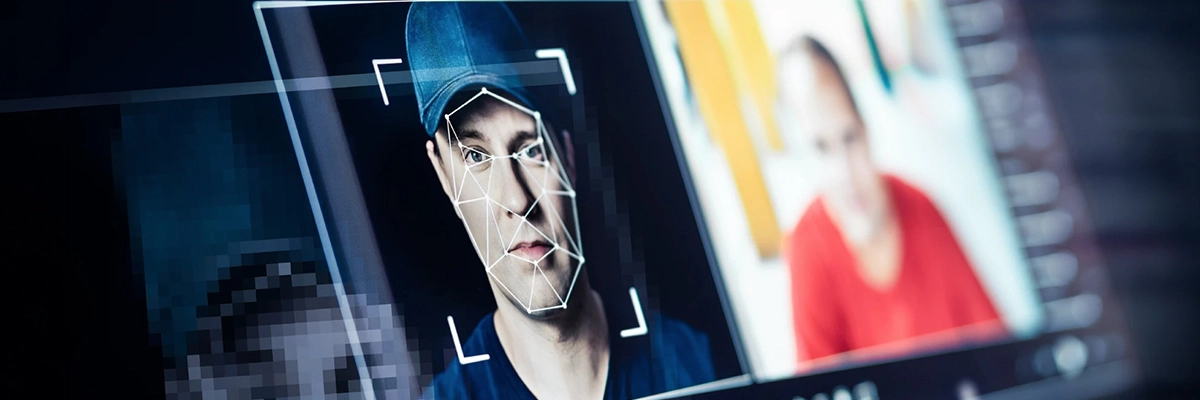
How do these deepfakes trick ID scanners?
Essentially, computer software looks for facial similarities between faces and connects them to real people. The trick takes advantage of how easily people are led to trust what they initially see. Most human eyes won’t ever detect the almost seamless video.
Learn More. See our guide to identity theft vs identity fraud for key differences and ways you can protect yourself.
Why Traditional Identity Verification Cannot Stop Modern Fraud
Traditional identity verification methods still have value. The problem is that many were designed for a fraud environment that looked very different from today’s.
A fraudster no longer needs to rely on a poorly made fake ID or an obviously suspicious photograph. Generative AI can help create convincing faces, manipulate documents, imitate voices, and produce realistic video. That means businesses need to look beyond whether an individual piece of information appears genuine.
1. Manual Verification
Manual verification depends on people reviewing documents, photographs, and customer information. Human involvement can be useful when an application needs additional investigation, but it also introduces limitations.
Human errors are inevitable. A reviewer can overlook a subtle alteration in an identity document or miss an inconsistency between the information provided and the supporting evidence.
2. Password-Based Authentication
A password proves that someone knows a particular credential. It doesn’t necessarily prove that the person using it is the legitimate account holder.
Credential theft can give attackers access to accounts that have already passed identity verification. Phishing attacks make the problem worse by convincing legitimate users to hand over passwords or other authentication information.
3. Static ID Checks
Static ID checks focus on whether a document appears legitimate. That is useful, but it doesn’t necessarily establish that the person presenting the document is its rightful owner.
Fraudsters can use fake documents, altered images, and stolen identities to create applications that look legitimate at first glance.
The scale of document fraud is also changing. Entrust reported that digital document forgeries accounted for more than half of the document fraud detected in its 2025 research, following a substantial year-over-year increase.
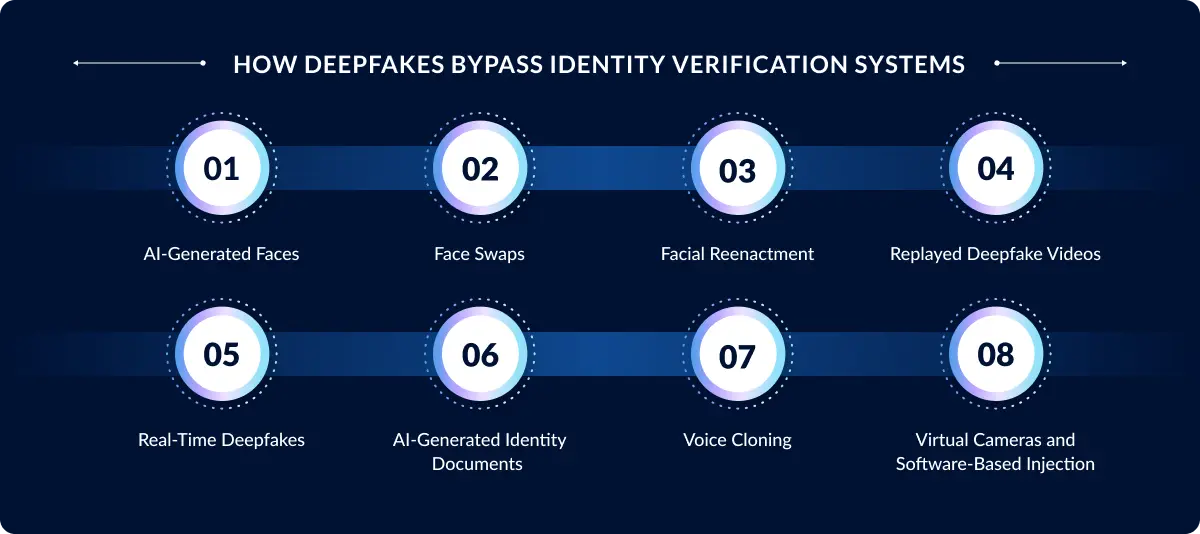
How Deepfakes Bypass Identity Verification Systems
Deepfakes can target almost every visual or audio element used during an online verification process. Some attacks manipulate the person’s appearance, while others manipulate the document or the digital media reaching the verification system.
Understanding these different techniques is an important part of understanding how to prevent deepfakes.
1. AI-Generated Faces
AI can generate highly realistic faces that don’t belong to any real person.
Fraudsters can combine these synthetic faces with fabricated or stolen personal information to create identities that appear genuine during an initial verification attempt. The challenge is straightforward: there may be no real person behind the face for the business to verify.
2. Face Swaps
Face swapping replaces one person’s face with another person’s likeness.
During an identity verification attempt, an attacker could potentially use this technique to make their appearance resemble the legitimate identity holder.
Basic face swaps can sometimes leave visible artifacts, but more sophisticated manipulation can be considerably harder to identify through ordinary visual inspection.
3. Facial Reenactment
Facial reenactment takes manipulation a step further by altering expressions and facial movements.
Instead of simply placing another face over an existing video, the technology can make one person’s expressions appear to belong to another identity.
This becomes particularly relevant when a verification process asks customers to move their head, speak, or respond to prompts. The system needs to establish that the interaction is genuine, not simply that a face is visible.
4. Replayed Deepfake Videos
A replayed deepfake uses previously created media and presents it as though it were part of a live verification session.
An attacker may prepare a manipulated video and attempt to feed it into a process that expects a real-time interaction.
This is one reason simply asking a customer to submit a video isn’t enough. A stronger process needs to determine whether the person is genuinely present and responding during the verification event.
5. Real-Time Deepfakes
Real-time deepfakes make the problem more difficult because manipulation can happen during a live interaction.
Instead of uploading a prepared recording, an attacker can attempt to alter their appearance while communicating through a camera.
This creates a different challenge for deepfake detection for identity verification. The system needs to evaluate the authenticity of the interaction as it happens rather than relying only on analysis of a previously recorded file.
6. AI-Generated Identity Documents
Deepfake technology isn’t limited to faces.
AI can also assist with creating or manipulating identity documents. A fraudster can potentially combine an altered document with a synthetic face and fabricated personal information to produce a more convincing identity.
This is why document verification should not be treated as a standalone security measure. A document may appear legitimate while the person presenting it is not the rightful identity holder.
7. Voice Cloning
Voice is another identity signal that can be manipulated.
Voice cloning technology can reproduce aspects of a person’s voice and potentially be used for impersonation during calls, customer-service interactions, or other voice-based processes.
The growing availability of synthetic voice technology means that a familiar-sounding voice should not automatically be treated as proof that someone is who they claim to be.
8. Virtual Cameras and Software-Based Injection
Some attacks target the verification process itself rather than the person standing in front of the camera.
A fraudster may attempt to introduce manipulated images or video directly into the verification workflow through virtual cameras, emulated devices, or other software-based techniques.
This is known as an injection attack.
Signs of a Deepfake Identity Theft Attempt
Not every deepfake has obvious visual flaws. As synthetic media improves, relying on clues such as strange blinking or unnatural facial expressions becomes less dependable.
Still, certain signals can indicate that an identity verification attempt deserves a closer look.
1. Unnatural Facial Movements
Unusual facial movements can sometimes indicate manipulation.
Expressions may appear stiff, transitions between expressions may look unnatural, or facial movements may not fully correspond with head movement.
These signs should be treated as warning signals rather than definitive proof. Camera quality, lighting, accessibility needs, and other legitimate factors can also affect how a person’s face appears.
2. Poor Lip Synchronization
A noticeable mismatch between speech and mouth movement can be another warning sign.
The person’s mouth may move slightly before or after the corresponding sounds, or the facial movement may not properly match the speech.
However, high-quality synthetic media can reduce these inconsistencies, so lip synchronization should never be the only basis for a verification decision.

3. Robotic Voice Patterns
Synthetic voices may sometimes produce unusual pauses, emphasis, rhythm, or emotional patterns.
A voice that sounds overly consistent or disconnected from the apparent context can justify additional scrutiny.
But genuine people can also have unusual speech patterns, so voice characteristics should be considered alongside other verification signals.
4. Suspicious Identity Documents
Unusual formatting, inconsistent typography, altered photographs, missing security elements, or discrepancies between different parts of a document can indicate manipulation.
Automated document analysis can help identify irregularities that may be difficult to spot during a quick manual review.
5. Inconsistent Personal Information
Information that doesn’t match across the verification process can be another warning sign.
Names, dates of birth, addresses, or other identity attributes may conflict between the application, identity document, and other available information.
A mismatch doesn’t automatically mean identity fraud. A simple typo or legitimate change in personal circumstances can produce the same result. The important thing is determining whether the discrepancy can be explained.
6. Unusual Account Activity
Deepfake identity theft doesn’t necessarily end when an account is successfully created.
A legitimate account can later become a target for account takeover. Sudden changes in login behavior, unfamiliar devices, unusual transactions, or unexpected changes to account information can all warrant additional review.
This is why deepfake protection shouldn’t stop after onboarding. Identity risk can change throughout the customer relationship.
7. Failed Biometric Verification Attempts
Repeated biometric verification failures can also indicate that something isn’t right.
Several unsuccessful attempts may suggest that the person doesn’t match the identity being presented or that the verification media is being manipulated.
At the same time, legitimate users can fail biometric checks because of poor lighting, camera problems, accessibility requirements, or other technical issues. The result should therefore be considered alongside other risk signals rather than treated as automatic proof of fraud.
Deepfake: Tips for How to Prevent Fraud
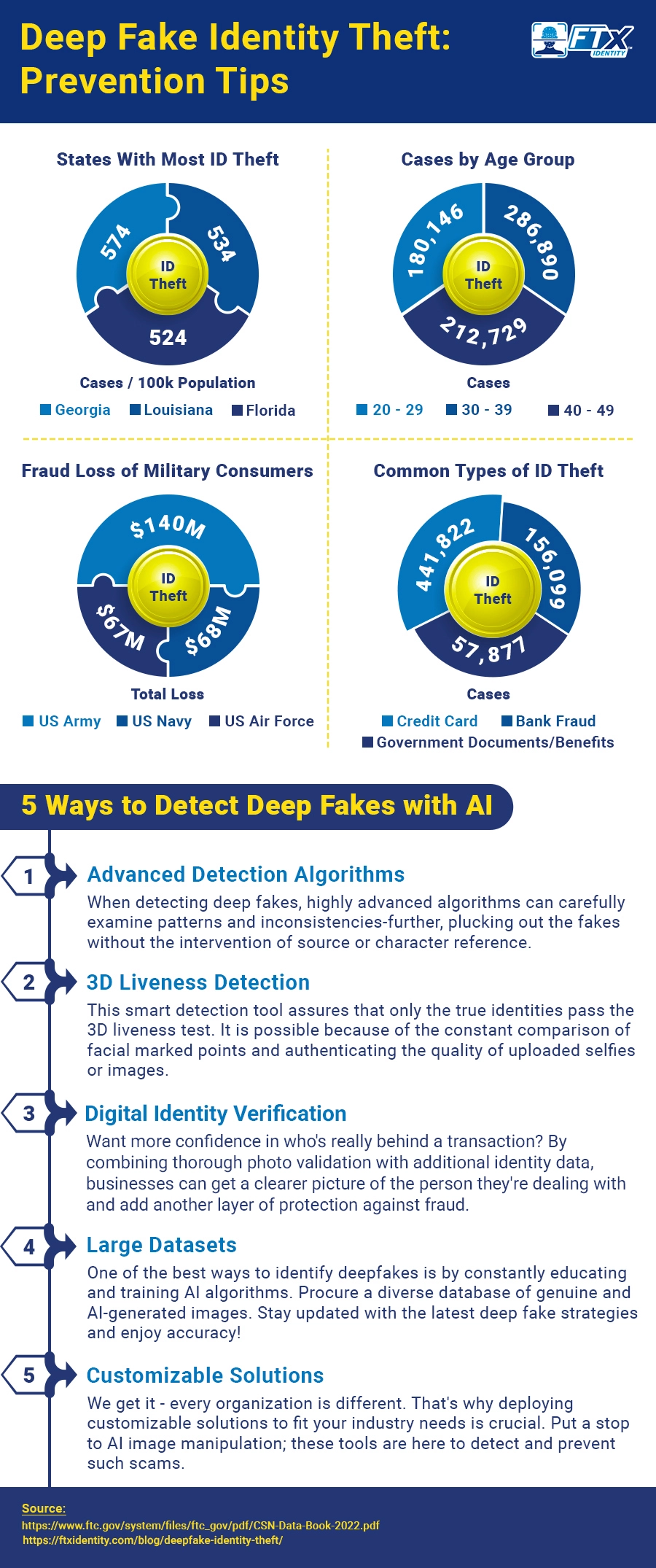
How Can You Detect Deepfakes?
While businesses may effectively protect themselves from deepfake fraud and lessen the impact of future identity-based attacks, current techniques of fraud detection cannot verify 100% of true identities online. In order to identify third-party fraud, spot a fake ID, and stop impersonation efforts, financial institutions and fintech businesses must exercise extra caution while onboarding new customers. Businesses can correctly identify deepfakes and stop more fraud with the right technology.
Detecting deepfake identity theft isn’t an easy task. As AI image generation tools evolve, the ability to detect the images changes. Algorithms must be trained to spot tiny inconsistencies in these images. Here’s a look at how AI verification works:
1. Advanced Detection Algorithms: Highly precise algorithms must be developed to scrutinize visual and contextual cues. These algorithms can identify subtle artifacts, inconsistencies, and patterns that signal AI manipulation, even in the absence of reference data or ground truth.
2. 3D Liveness Detection: Businesses must confirm identification with deep 3D liveness tests, which estimate liveness by evaluating the quality of selfies and estimating depth cues for face authentication, in addition to checking PII during the onboarding process. In many instances, fraudsters may try to pass themselves off as individuals by using real PII in conjunction with a headshot that doesn’t reflect the person’s true identity.
3. Digital Identity Verification: Age verification software can add another layer of protection by looking at a customer’s photo alongside other identity data. Bringing these signals together can help businesses spot inconsistencies, verify that customers are who they claim to be, and reduce the risk of fraudulent identities.
4. Large Datasets: To best train algorithms, a large and diverse dataset of both authentic and AI-generated images is needed. This extensive training data allows the algorithms to learn and adapt to the latest trends in AI image generation, ensuring superior detection accuracy.
5. Customizable Solutions: Recognizing that each organization has unique needs and requirements, customizable solutions are offered that can be tailored to specific industries. This ensures effective detection and prevention of AI-generated image manipulation.
The accessibility of deepfake software has made it more difficult to stop digital fraud and deepfake identity theft. Everyone has simple access to phone apps and computer software that can create fake information, from common consumers with no technical skills to state-sponsored actors. The technology is a particularly pernicious fraud vector since it is getting harder for both people and fraud detection tools to discern between real video or audio and deepfakes.
Detecting this fraud requires the latest identity verification methods.
Industries Most Affected by Deepfake Identity Fraud
Deepfake identity fraud can affect almost any organization that relies on digital identity. However, some industries face greater exposure because identity is directly connected to financial transactions, account access, regulatory requirements, or customer trust.
1. Financial Services
Financial services are an attractive target because successful identity fraud can lead directly to financial gain.
Common risks include:
- Account opening fraud
- Customer impersonation
- Account takeover
- Synthetic identity fraud
- Fraudulent transactions
2. Online Retail
Online retailers can face deepfake-related fraud through fraudulent purchases and account takeover.
An attacker who gains access to a legitimate account may also gain access to saved payment details, loyalty benefits, promotional credits, and personal information.
Retailers therefore need to balance security with convenience. Adding unnecessary friction can frustrate genuine customers, while weak identity controls can leave accounts and transactions exposed.
3. Regulated Retail
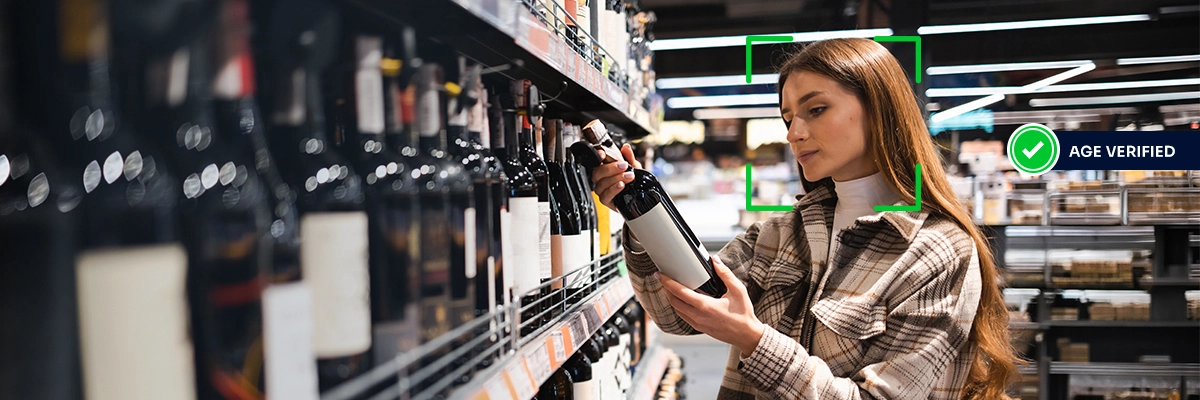
Regulated retail faces an additional identity challenge because businesses may be required to establish that a customer meets specific eligibility or age requirements.
Age verification fraud and fake identity usage can create financial, regulatory, and reputational problems.
For businesses selling age-restricted products, the objective isn’t simply to check whether an ID exists. The process needs to establish that the person presenting the ID is actually the person represented by it.
4. Digital Platforms
Attackers can create fake accounts, impersonate legitimate users, or take over existing profiles. These activities can undermine confidence in the platform even when the immediate financial loss is relatively small.
User trust is particularly important for platforms built around social interaction. When users repeatedly encounter fake profiles or impersonators, they may begin questioning whether the platform can protect their identity and personal information.
For these businesses, deepfake prevention is therefore about more than stopping individual fraudulent accounts. It is also about maintaining confidence in the platform itself.
Conclusion
Even though it can be challenging to avoid all forms of fraud, security teams can halt deepfake identity theft in its tracks by moving past outdated methods and using identity verification procedures with predictive AI/ML analytics to reliably spot fraud and foster online trust.
With FTx Identity, your customers can have peace of mind that their accounts are protected from fraud and their data is secure. Our innovative identity verification software prevents the sale of age-restricted products to minors while integrating seamlessly with desktop, mobile, and web applications for an effortless user experience.
Customers can benefit from an easy self-signup and online ID verification so they can buy age-restricted products with ease while protecting their personal information, and retailers can stay compliant with regulations and sell age-restricted products with ease without the fear of losing their license.
Build a Stronger Defense Against Deepfake Fraud
Deepfake prevention starts with stronger identity verification.