


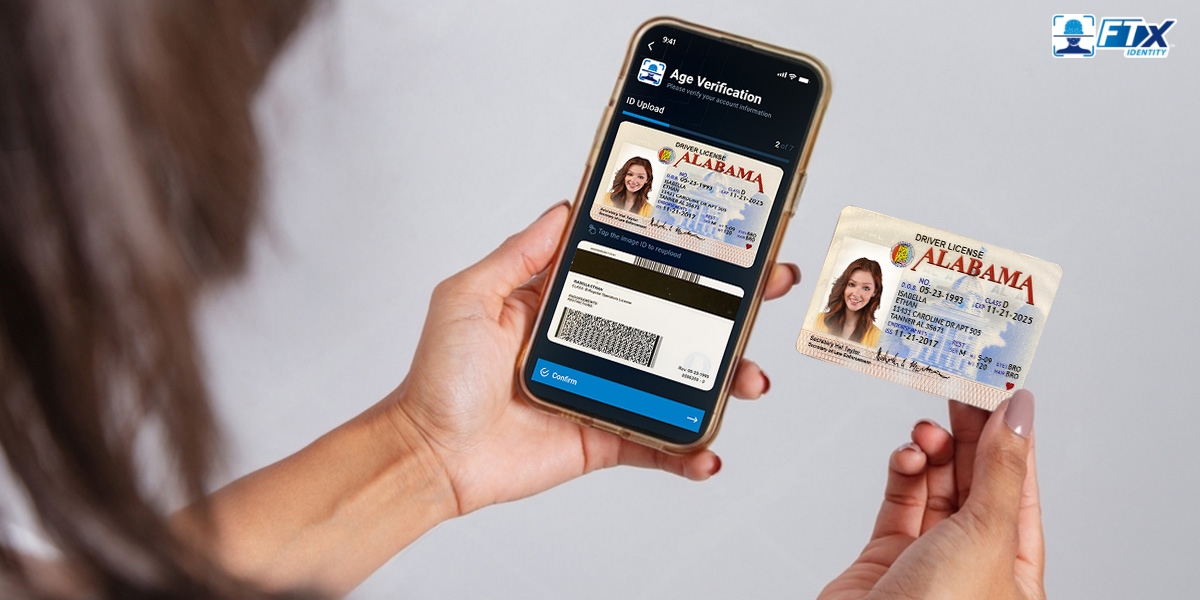
ID verification has come a long way—from simple barcode scans to secure digital credentials on your phone. And in 2026, it’s evolving faster than ever.
Regulations are tightening, mobile driver’s licenses (mDLs) are gaining traction, NFC ID scanning is becoming mainstream, and fraud is getting more sophisticated. For businesses—from retail to gaming—staying ahead isn’t optional.
In this blog post, we’ll break down the ID scanning technologies you need to know in 2026: PDF417 barcodes, MRZ, NFC chips, and mDLs. You’ll learn how they work, their strengths and limitations, and which industries each is best for—so you can choose the right solution for your business.
Why ID Scanning Matters More Than Ever in 2026
Fraud is no longer just about lost or stolen physical IDs. Synthetic identities and AI-driven document forgeries are on the rise, making traditional visual inspection increasingly risky.
At the same time, compliance pressures are growing. Know Your Customer (KYC) and Anti-Money Laundering (AML) regulations are stricter than ever, and age verification requirements span industries from hospitality and retail to gaming.
Customer expectations are also evolving. People want fast, seamless, tap-and-go identity checks that don’t slow down their experience. This shift is driving the move from simple visual inspections to machine-readable, cryptographically validated credentials that combine speed with security.
1. PDF417 Barcodes
What Is PDF417?
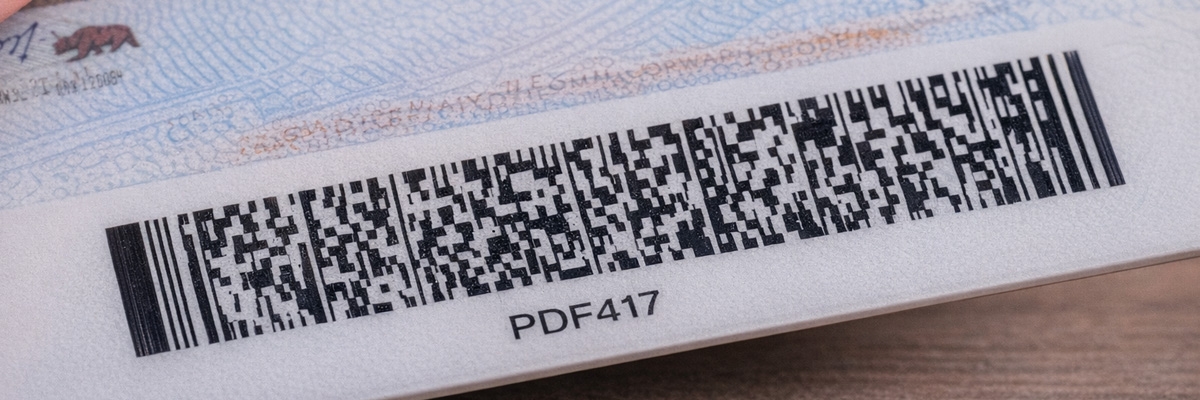
PDF417 is a stacked 2D barcode that’s widely used on North American driver’s licenses and other government-issued ID cards. Unlike a traditional linear barcode, PDF417 can store multiple lines of data, allowing it to encode personal and document information in a compact space.
How It Works
When scanned, a PDF417 barcode transmits the data stored on it to a reader or verification system.
This typically includes:
- Full name
- Date of birth
- Document or license number
- Address or other identifying info
Pros
- Widespread on North American IDs – almost every U.S. and Canadian driver’s license includes a PDF417 barcode.
- Fast and cost-effective – scanning takes a fraction of a second and requires minimal hardware.
- Reliable for basic verification – ideal for age-restricted purchases or confirming identity at a POS.
Cons
- Easier to clone or tamper with compared to NFC chips or mobile digital IDs (mDLs).
- Limited security – lacks encryption or cryptographic protections.
- Data may be outdated – if the ID holder updates their information after issuance, the barcode will not reflect it.
2. MRZ (Machine-Readable Zone)
What Is MRZ?
The machine-readable zone (MRZ) is a standardized set of characters found at the bottom of passports and some national ID cards worldwide. It enables automatic verification of key information using scanners.
How It Works
Using optical character recognition (OCR), passport scanners read the MRZ to extract standardized data such as name, document number, nationality, and date of birth.
MRZ codes are a key tool for quick, accurate identity verification. Discover how they work and why
they’re trusted worldwide for secure scanning.
Pros
- Global uniformity – MRZs follow International Civil Aviation Organization (ICAO) standards and are recognized internationally.
- Resistant to simple manipulations – harder to alter than plain printed text.
- Works offline – no internet connection needed for scanning and verification.
Cons
- OCR-dependent – scanning accuracy affected by lighting or document quality.
- Limited availability – not present on all national ID cards.
- Limited data – stores only essential fields compared to PDF417 or NFC.
3. NFC-Based ID Scanning
What Is NFC?
Near field communication (NFC) is a contactless technology used in ePassports, some national ID cards, and mobile devices to transmit identity data securely.
How It Works
NFC-enabled readers communicate with the chip in the ID or device to extract encrypted data, often including personal information and biometric identifiers.
Pros
- Highest fraud resistance – extremely difficult to counterfeit or alter
- Tamper-proof cryptographic signatures – maintain data integrity and authenticity
- Biometric compatibility – supports facial comparison or other biometric verification
- Fast and contactless – tap-and-read provides a convenient verification process
Cons
- Requires NFC-capable device – specialized hardware or modern smartphones needed
- User adoption – some users still unaware or reluctant to tap their cards
- Slower onboarding – initial setup and registration can take extra time compared to barcodes
4. mDL (Mobile Driver’s License)
What Is mDL?
From faster age checks to stronger fraud protection—discover how mobile driver’s licenses are
redefining alcohol sales and compliance now.
How It Works
The mDL communicates via NFC or QR codes to transmit encrypted identity data, optionally including biometrics or selective data sharing.
Pros
- Very high security – device-based encryption and optional biometrics reduce fraud risk.
- Fast and selective – users can quickly share only the necessary information.
- Data-rich – supports detailed personal data, credentials, and loyalty/reward info.
Cons
- Device-dependent – requires a compatible smartphone or digital credential app.
- Adoption limited – not all jurisdictions or systems currently support mDLs.
- Infrastructure required – readers and verification apps must be NFC- or QR-compatible.
Comparative Breakdown: PDF417 vs MRZ vs NFC vs mDL (2026)
From traditional barcodes to mobile digital IDs, modern identity verification offers a range of tools with varying security, data, and user experience.
Here’s a quick breakdown of PDF417, MRZ, NFC, and mDL technologies to help you understand their strengths and limitations:
| Feature | PDF417 | MRZ | NFC | mDL |
|---|---|---|---|---|
| Security | Medium | Medium | High | Very High |
| Fraud Resistance | Low | Medium | High | Very High |
| Data Richness | Moderate | Low | High | High |
| Hardware Requirements | Barcode Scanner | OCR Scanner | NFC Device | Compatible Reader/App |
| User Experience | Fast | Moderate | Moderate | Fast, Selective |
Industry Use Cases & Best-Fit Technology
Different industries have unique identity verification needs.
Here’s a look at which technologies—PDF417, MRZ, NFC, and mDL—work best for key use cases:
Retail & Age-Restricted Sales
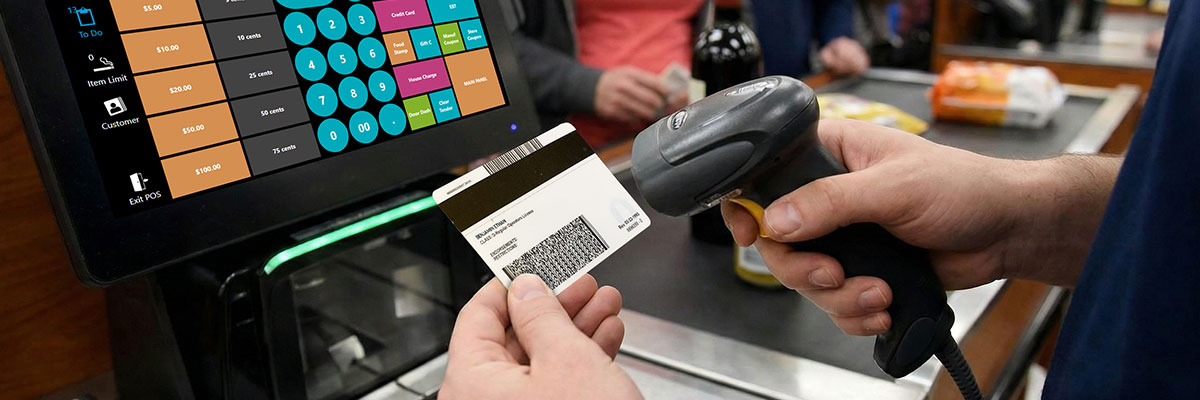
- PDF417 – continues to be a fast, reliable, and cost-effective solution for age verification at the point of sale, especially in convenience stores and quick-service environments.
- NFC & mDL – provide enhanced security for high-value or sensitive transactions, enabling fraud detection and stronger verification when age or identity compliance is critical.
- Impact – supports both regulatory compliance and smooth customer flow, reducing checkout friction while mitigating risk.
Financial Services & Fintech
- mDL & NFC – offer secure KYC verification, allowing financial institutions to confirm identity with encrypted, device-based credentials.
- Impact – helps prevent fraud, ensures compliance with regulatory requirements, and accelerates account onboarding or transaction approvals.
Hospitality
- NFC & mDL – enable contactless check-ins at hotels, resorts, and event venues. Digital credentials protect guest privacy while allowing staff to quickly verify identity.
- Impact – enhances the guest experience, reduces wait times, and maintains security standards for access control.
Gaming & Lottery
- NFC & mDL – cryptographically secure IDs are critical in high-risk environments where age verification and identity authentication must meet strict regulatory requirements.
- Impact – minimizes fraud, ensures compliance with gaming and lottery laws, and protects operators from liability.
Insurance
- MRZ & NFC – support verification of policyholders during claims or new account creation. OCR or NFC-based scanning can quickly validate personal information against government-issued IDs.
- Impact – reduces the risk of identity fraud, accelerates claims processing, and enhances trust between the insurer and customer.
Convenience Retail
- PDF417 – remains the go-to choice due to speed, affordability, and widespread adoption in North America.
- Impact – supports fast-paced checkout environments where efficiency is essential, particularly for age-restricted products like alcohol or tobacco.
Healthcare
- NFC & mDL – provide secure, privacy-focused verification for patients, ensuring that sensitive medical records are protected while confirming identity accurately.
- Impact – strengthens the Health Insurance Portability and Accountability Act (HIPAA) compliance, improves patient safety, and streamlines check-in or access to care.
Conclusion
In 2026, a variety of ID scanning technologies are available to meet different business needs.
PDF417 barcodes remain widely used for speed and convenience, MRZ offers global standardization, NFC chips provide strong cryptographic security, and mDLs represent the future of privacy-conscious digital identity.
The right solution depends on your industry, compliance requirements, and customer expectations—but one thing is clear: ID scanning is no longer just a formality—it’s a critical part of fraud prevention, compliance, and customer experience.
Compliance, security, and speed—all in one solution. Find out how FTx Identity can help your business verify IDs with confidence by setting up a consultation and demo.