


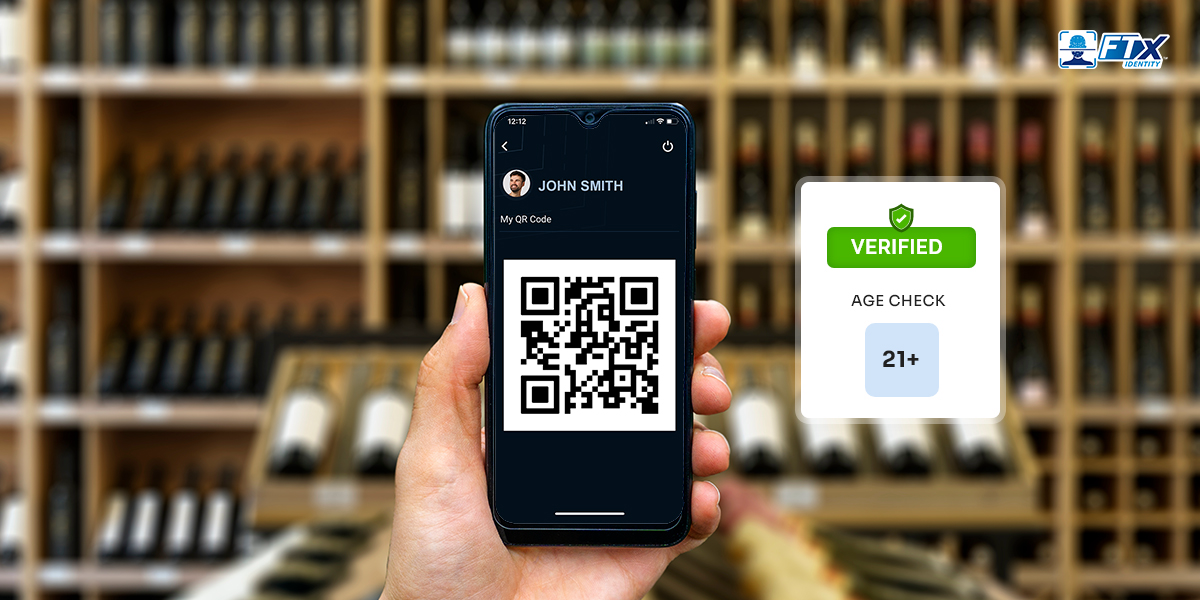
Retail is becoming increasingly digital-first, and today’s shoppers expect speed, convenience, and minimal friction—whether they’re buying online, picking up in store, or using a self-checkout kiosk. At the same time, trust in traditional manual ID checks is shrinking. Fake IDs are easier to produce, staff turnover makes consistent enforcement tricky, and privacy concerns are growing.
In this blog post, we’ll dive into how retailers are moving toward contactless, digital identity workflows to keep up with these changes. We’ll focus on QR-based identity proofing—a solution that’s gaining real momentum. It might look simple at first glance, but the technology behind it is much more secure and versatile than many retailers realize.
What Is QR-Based Identity Proofing?
QR-based identity proofing is a digital method of verifying a customer’s age or identity using a secure QR code. Instead of handing over a physical ID, customers scan or present a QR code that represents a verified identity credential.
Behind the scenes, the QR code functions as an encrypted, time-bound identity token. When scanned, it connects to a secure verification service that confirms the required attributes—such as age eligibility or identity match—without exposing unnecessary personal details.
It’s also important to distinguish between static and dynamic QR codes. Static QR codes never change and are far less secure. Dynamic QR codes, which are commonly used in identity proofing, refresh regularly, expire quickly, and are tied to real-time validation, making them significantly harder to copy or reuse fraudulently.
Core Components of QR-Based Identity Proofing
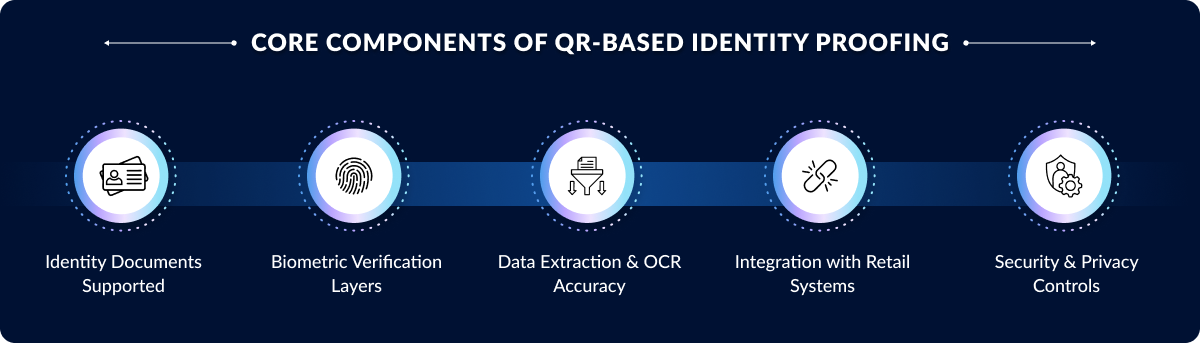
Here’s a look at the key components that make QR-based identity proofing secure, accurate, and easy to use—from the IDs it supports to the technology behind verification:
Identity Documents Supported
QR-based identity proofing supports a range of government-issued credentials, including:
- Physical driver’s licenses
- Digital and mobile driver’s licenses (mDLs)
This flexibility means retailers can accommodate both traditional and digital IDs as adoption grows, reducing friction for customers and ensuring compliance with verification requirements. It also allows businesses to support a wider range of shoppers without adding extra steps at checkout.
Biometric Verification Layers
To confirm that the person presenting the QR code is the rightful owner, biometric safeguards are layered into the verification process.
These may include:
- Face matching — compares a live selfie to the photo on the credential.
- Liveness detection — ensures the user is physically present and not using a photo, video, or deepfake.
By adding these layers, retailers can reduce fraud risk while keeping the verification process seamless for customers.
Data Extraction & OCR Accuracy
Advanced optical character recognition (OCR) technology extracts and validates ID data during the initial verification process. High OCR accuracy reduces false rejections and ensures consistent results across different ID types and jurisdictions.
This means customers spend less time waiting at checkout, while retailers can confidently enforce identity and age verification rules.
Integration with Retail Systems
QR-based identity proofing integrates seamlessly across the retail ecosystem, including:
- Point-of-sale (POS) terminals
- Ecommerce checkout flows
- Loyalty and customer relationship management (CRM) systems
- Age-gating screens for restricted products
This level of integration allows retailers to maintain a consistent, frictionless identity verification experience across all channels. Whether a customer is shopping online, in-store, or using a self-checkout kiosk, their verified identity travels with them—reducing repeated verification steps and improving overall satisfaction.
Security & Privacy Controls
Strong security and privacy protections are built into QR-based identity proofing, such as:
- End-to-end encryption to safeguard data in transit
- Zero data storage options for sensitive information, minimizing breach risks
- Verifiable credentials that confirm eligibility without revealing unnecessary personal details
These measures not only help retailers stay compliant with privacy and regulatory requirements but also build trust with customers. When shoppers know their retail identity data for loyalty programs is protected and only essential information is shared, verification feels safer and more transparent.
Why Retailers Are Adopting QR-Based Identity Proofing
Retailers are turning to QR-based identity proofing because it addresses multiple challenges at once—speed, accuracy, security, and customer privacy.
Here’s why it’s becoming a go-to solution for modern retail:
Enables Digital-First Verification Without Exposing Personal Details
With QR-based identity verification, customers load a verified QR code on their own mobile device rather than presenting a physical ID. Only essential details—such as name and age verification status—are displayed, while sensitive information like home address remains hidden. This approach improves privacy while still meeting compliance requirements.
Need for Faster Customer Experience
Long checkout lines and manual ID checks create friction. QR-based verification completes in seconds, helping retailers move customers through checkout faster—especially during peak hours.
Eliminating Manual ID Checking Errors
Human errors are unavoidable. QR-based systems apply the same rules every time, reducing inconsistencies caused by distracted staff, poor lighting, or unfamiliar IDs.
Reduced Fraud & Fake ID Attempts
Because QR codes are dynamically generated and validated in real-time, they are far more difficult to forge than physical IDs. This significantly lowers the success rate of fake ID attempts.
Improved Compliance with Age-Restricted Product Laws
QR-based identity proofing creates a reliable, auditable process for verifying age-restricted purchases, helping retailers meet regulatory requirements with confidence.
Enabling Frictionless Omnichannel Identity
Retailers can use the same verified identity across in-store, online, and mobile channels. This continuity reduces repeat verification and improves the overall customer experience.
Stronger Customer Trust & Transparency
When customers know their data is protected and only necessary information is shared, trust increases. QR-based identity proofing makes verification feel safer and more transparent.
How QR-Based Identity Proofing Reduces Fraud
Fraud comes in many shapes in retail—from fake IDs and online bots to return and pickup scams. QR-based identity proofing addresses these risks with multiple layers of verification, protecting both retailers and customers while keeping transactions fast, seamless, and secure.
Fake ID Fraud Reduction
Dynamic QR codes tied to verified credentials make it extremely difficult for counterfeit or altered IDs to pass verification. This reduces the risk of underage sales or identity-related fraud while giving staff confidence that every transaction is legitimate.
Bot Traffic & Synthetic Identity Mitigation
In online environments, QR-based identity proofing helps block automated bot traffic and synthetic identities that traditional form-based checks often miss. This prevents fraudulent online orders and protects both inventory and customer accounts.

Preventing Return Fraud for High-Value Items
Retailers can require QR-based identity verification during returns to confirm the original buyer, reducing refund abuse and loss. This adds a secure, auditable layer to the returns process, which is particularly important for high-value items or restricted products.
Preventing “Pickup Impersonation” Fraud
For BOPIS and curbside orders, QR verification ensures the person picking up the order is authorized to do so. This not only prevents fraud but also improves the customer experience by reducing confusion or delays during pickup.
Advanced Fraud Signals
Modern QR-based systems go beyond basic verification, analyzing additional fraud indicators such as device intelligence, IP reputation, and behavioral patterns. This real-time insight helps identify suspicious activity before it becomes a problem, giving retailers a proactive approach to fraud prevention.
Use Cases of QR-Based Identity Proofing in Retail
QR-based identity proofing isn’t just about security—it’s a practical tool that makes everyday retail operations smoother, faster, and more reliable.
Here’s how retailers are using it:
Age-Restricted Purchases
QR code-based age verification is ideal for alcohol, tobacco, vape, and cannabis sales, as well as on-demand delivery apps and unattended kiosks. By confirming age instantly, retailers can reduce compliance risk while keeping the checkout process quick and seamless.
Loyalty Program Enrollment
Customers can enroll instantly using a QR code at checkout or through a link sent via short message service (SMS) or email. This eliminates long forms, speeds up signups, and helps retailers capture more engaged, verified loyalty members.
Buy Online, Pick Up In-Store (BOPIS)
QR identity matching enables fast, secure pickups while reducing fraud in curbside and in-store fulfillment. It ensures the right customer receives the order, enhancing trust and efficiency.
Returns and Refund Authentication
Verifying identity during returns helps ensure the original purchaser is present, reducing fraudulent refund attempts. This adds a layer of protection for both high-value and everyday items, safeguarding revenue.
Self-Checkout Security
At self-checkout, customers can scan a QR code to verify age or identity before completing restricted purchases—without requiring staff intervention. This keeps self-checkout lines moving while maintaining compliance and security.
Emerging Trends in QR-Powered Identity Proofing
QR-based identity proofing is evolving beyond basic verification. New tools and technologies are helping retailers make identity checks even more secure, seamless, and privacy conscious.
QR + Digital ID Wallets
As mobile driver’s licenses (mDLs) gain adoption, QR-based verification is increasingly connecting directly with digital ID wallets, allowing customers to verify their identity with just a few taps on their mobile device. This integration makes the process more convenient for shoppers and reduces reliance on physical IDs.
QR + Decentralized Identity (DID)
Decentralized identity models give customers control over their personal information, sharing only what’s necessary—like age eligibility—without exposing sensitive details such as address or phone number. This approach builds trust by putting privacy first while still ensuring compliance with verification requirements.
AI-Driven Fraud Prevention
Advances in AI are making QR-based identity proofing smarter, with deepfake-resistant liveness checks and behavioral anomaly detection to identify suspicious activity in real- time. These AI-driven tools help retailers stay ahead of increasingly sophisticated fraud attempts.
Multimodal Verification
Retailers are combining QR codes with biometric verification to create multiple layers of security, ensuring that identity checks are robust without slowing down the shopping experience—whether in-store, online, or at self-checkout. By layering verification methods, businesses can provide stronger protection while keeping the process seamless for customers.
Conclusion
QR-based identity proofing is quickly becoming an essential tool for retailers navigating rising fraud, stricter compliance requirements, and evolving customer expectations. By balancing security, privacy, and convenience, it offers a modern approach to identity verification that aligns with how today’s consumers want to shop.
Every retail setup is unique, and FTx Identity adapts to yours—integrating seamlessly with POS, ecommerce, and self-checkout workflows. Fast, secure, and friction-free, it makes verification effortless for both staff and customers.
Want to see how it would work for you? Schedule a consultation and try a demo today.