



Regular customer reverification is crucial for age-restricted ecommerce stores and online gambling platforms. Staying compliant with legal requirements isn’t just important – it’s necessary. Skipping this process can leave your business vulnerable to serious consequences, including steep fines, increased fraud, costly credit card disputes, and lasting damage to your reputation.
Age-restricted industries like alcohol sales and online gambling operate in a unique and highly regulated environment. For businesses in these industries, proper customer verification isn’t just a box to tick; it’s a legal and ethical responsibility. However, as the landscape becomes more complex – with increasing regulatory scrutiny and evolving threats – it’s no longer enough to rely solely on one-time verification.
That state and federal regulations for age-restricted sales apply equally to in-person stores and online platforms? What steps is your business taking to ensure compliance across all sales channels? We’re here and ready to listen!
The FDA employs multiple enforcement measures to address retailers who breach federal laws or regulations. These include issuing warning letters, imposing civil monetary penalties, conducting product seizures, filing injunctions, implementing no-sale orders, and pursuing criminal charges. Additionally, retailers found violating these regulations might also breach state laws, leading to state-imposed penalties or related legal actions.
FDA Fines and Regulations
| Number of Violations | Fine |
|---|---|
| 1st | Warning Letter |
| 2 within 12 months | $356 |
| 3 within 24 months | $709 |
| 4 within 24 months | $2,846 |
| 5 within 36 months | $7,115 |
| 6 within 48 months | $14,232 |
| 5 or more within 36 months | No Sale Order |
This blog post explores the challenges age-restricted industries face, the limitations of initial customer verification processes, and the growing need for customer reverification. We’ll also highlight the benefits of implementing reverification and how FTx Identity can help your business stay ahead of the curve.
- What Is Customer Reverification: Concept and Definition
- How Customer Reverification Works
- The Evolving Landscape of Age-Restricted Industries
- The Limitations of One-Time Verification
- The Benefits of Implementing Customer Reverification
- Reverification Solutions for Age-Restricted Industries
- How FTx Identity Can Help You Succeed
What Is Customer Reverification: Concept and Definition
In digital identity and compliance, the initial check is only the start. Customer reverification is the ongoing process of confirming a user’s identity and eligibility well after sign-up.
Think of initial verification as locking a door once; reverification ensures the lock hasn’t been tampered with and the same authorized person still holds the key. This is especially critical in high-risk sectors like age-restricted ecommerce (alcohol, tobacco, vaping) and online gambling.
Also known as ongoing KYC or continuous identity verification, reverification helps combat evolving threats such as identity fraud and synthetic IDs by confirming that today’s user is the same one verified before. It typically includes biometric checks, like live selfies, and document re-authentication, making it a core part of any effective risk management strategy.
How Customer Reverification Works
1. Customer Scans ID
The user is prompted to capture a new image of their government-issued ID document using their device’s camera. This is the first step in the document re-authentication process, providing fresh data for analysis.
2. Take a Live Selfie
Next, the user takes a real-time selfie. This photo is not for profile purposes; it is the raw material for biometric reverification, ensuring the physical presence of the account holder.
3. AI/Biometric/Liveness Detection
Sophisticated algorithms take over. AI compares the new ID scan to the original and checks for forgeries. Then, biometric reverification matches the live selfie to the photo on file and the new ID. Liveness detection confirms the selfie is of a living person, not a mask or photo, which is critical for synthetic ID detection.
4. Send OTP via Short Message Service (SMS)/Email
A one-time passcode (OTP) is sent to the account’s registered contact method. This step verifies the user still controls the linked phone or email, adding a crucial layer to confirm legitimate account access during the customer reverification event.
5. Store Data & Verified
Upon successful completion, the system securely updates the verification timestamp and audit log. This encrypted record of continuous identity verification proves ongoing KYC compliance for age-restricted ecommerce and online gambling compliance regulations.
The Evolving Landscape of Age-Restricted Industries

While the allure of high rewards has drawn many businesses to age-restricted industries, such as alcohol, gambling, or vaping, they come with substantial challenges. Recent trends highlight an escalating need for stricter monitoring and deeper customer verification methods.
Boost your online gambling platform with FTx Identity! Enhance the player experience with effortless age verification and seamless account creation. Maintain compliance with industry regulations while minimizing friction for your customers.
Increased Regulatory Scrutiny and Compliance Demands
Governments and regulatory authorities worldwide are imposing stricter laws for age-restricted industries. Non-compliance can lead to hefty fines, reputational damage, and even business closure. For instance, businesses in industries like online gambling must follow stringent Know Your Customer (KYC) policies to ensure only eligible individuals access their services. This rising regulatory scrutiny mandates a stronger focus on ongoing compliance, far beyond initial verification.
Discover how compliance with age verification laws can protect your business and build trust with your customers! From avoiding heavy penalties to ensuring consumer safety, this blog post provides essential insights and practical advice for industries like alcohol, tobacco, and online gambling.
The Rise of Sophisticated Fraudsters and Cyber Threats
Fraudsters and cybercriminals are constantly developing more advanced tactics to bypass security measures. Fake IDs, stolen credentials, and account takeovers are common tactics, and they’re only getting harder to detect. Businesses reliant on outdated, static verification methods are becoming sitting ducks for these evolving threats.
The Importance of Building and Maintaining Customer Trust
Trust is the lifeblood of any age-restricted industry. Customers need reassurance that their sensitive data is protected and that businesses are upholding industry standards. Any breach – whether it’s data-related or the misuse of services – can erode trust and drive customers to competitors.
Businesses must not only meet regulatory requirements but also go above and beyond to cultivate long-term credibility in the eyes of both customers and governing bodies.
The Limitations of One-Time Verification
For years, businesses have relied on one-time verification processes – checking a customer’s information during registration and leaving it at that. But in an era of rapidly changing risks, this is simply not enough.

The Risks of Relying on Initial Checks Alone
Fraudulent behavior and risks don’t stop at the verification stage. A customer verified at initial sign-up may:
- Later engage in illicit activities, like underage use or sharing accounts with unverified individuals.
- Experience personal data breaches, increasing the risk of account takeovers.
- Use outdated or fraudulent documents, slipping through initial checks unnoticed.
- Without continuous reevaluation, businesses remain exposed to ongoing risks that can easily spiral into significant legal, financial, and reputational consequences.
The Growing Need for Continuous Monitoring and Assessment
Ongoing customer monitoring is the key to detecting anything suspicious post-verification.
Continuous verification ensures that businesses:
- Catch signs of suspicious behavior early (e.g., logins from flagged locations or multiple account creations).
- Comply with dynamic regulatory changes, especially those requiring updated customer records.
- Stay ahead of fraudsters who adapt their strategies post-initial verification.
- Without this continuous layer of vigilance, businesses make themselves vulnerable to dynamic threats in an already challenging environment.
Common Scenarios Where Reverification is Necessary
Continuous identity verification is a strategic necessity for proactive risk management. Customer reverification serves as a key security checkpoint, triggered by events that indicate increased risk or changes in a user’s relationship with your platform.
Below are common scenarios where ongoing KYC is not just recommended, but essential for age-restricted ecommerce and online gambling compliance:
1. Suspicious Purchasing Patterns
Trigger: Unusual order volumes, rapid-fire purchases, shipping to multiple addresses, or transactions inconsistent with a user’s history.
Why It’s Necessary: These patterns are classic indicators of digital identity fraud or account takeover. Customer reverification confirms that the legitimate account holder is the one conducting the activity, shutting down fraudulent spending sprees and protecting your revenue.
2. Account Recovery or Password Reset
Trigger: A user requests access to a locked or compromised account.
Why It’s Necessary: This is a prime moment for fraudsters to seize control. A simple email link is not enough. Biometric reverification or document re-authentication ensures you are restoring account access to the true owner, not a criminal exploiting a stolen password.
3. Large Withdrawal Requests in Gambling
Trigger: A user initiates a high-value cash-out from their gaming wallet.
Why It’s Necessary: This is a critical financial control point. Customer reverification before processing mitigates the risk of money laundering and ensures funds are disbursed to the verified account holder. It is a cornerstone of online gambling compliance, providing an audit trail that satisfies regulators.
4. Subscription Products & Recurring Orders

Trigger: The renewal of a subscription for an age-restricted product (e.g., monthly alcohol delivery).
Why It’s Necessary: Customer age and identity are not permanent data points in a compliance sense. Regular document re-authentication for age-restricted ecommerce ensures the subscriber remains of legal age at the point of each new delivery, maintaining continuous compliance.
5. Corporate or Bulk Purchases
Trigger: An account requests to make a large-quantity order, often for business purposes.
Why It’s Necessary: These high-value transactions attract sophisticated fraud, including synthetic ID detection risks. Customer reverification validates the legitimacy of the business contact and adds a layer of security to prevent major losses from a single fraudulent bulk order.
Implementing strategic checkpoints for continuous identity verification transforms your compliance from a passive obligation into an active, intelligent defense system.
The Benefits of Implementing Customer Reverification
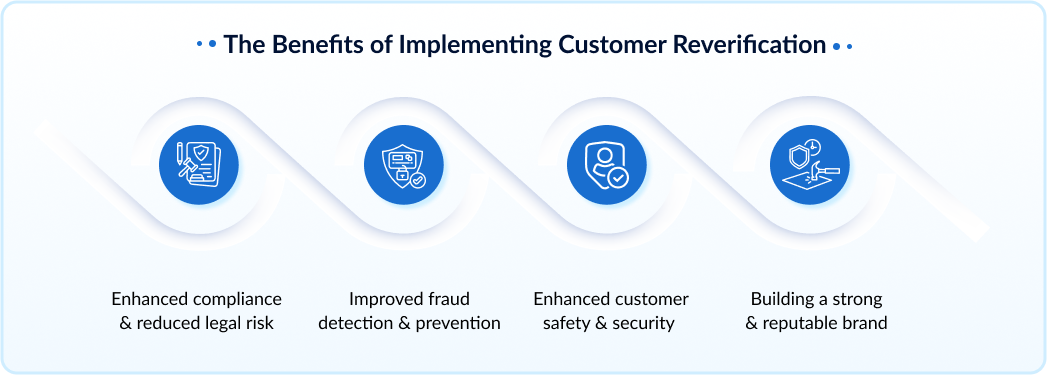
Transitioning to robust reverification practices can unlock significant advantages, positioning your business as a trusted player in your industry.
Enhanced Compliance and Reduced Legal Risk
Frequent customer reverification ensures businesses remain compliant with evolving regulations and industry standards. By consistently cross-checking records, you lower the risk of legal violations, keeping your operations in good standing with governing bodies.
Improved Fraud Detection and Prevention
Ongoing reverification adds a dynamic layer of security to your business. It enables you to identify and block malicious activities, such as account takeovers or fraudulent transactions, before they escalate. Preventing fraud not only saves businesses money but also reinforces customers’ trust in your operations.
Enhanced Customer Safety and Security
Reverification isn’t just about reducing risks for your business – it’s about ensuring your customers’ safety. Protecting customers from identity theft or unauthorized access creates a safer, more secure environment where they feel confident using your services.
Building a Strong and Reputable Brand
Implementing rigorous reverification practices demonstrates your commitment to ethical business practices and superior customer care. This elevates your reputation within the industry, setting you apart as a responsible and trustworthy organization. Customers are more likely to stick with a brand that prioritizes their safety over one that doesn’t.
Reverification Solutions for Age-Restricted Industries
For businesses in age-restricted ecommerce and online gambling, standard verification is just the starting point. Ongoing compliance requires modern, dynamic solutions that reliably re-confirm customer identity and eligibility over time. Effective customer reverification relies on specialized technologies that balance security, user experience, and regulatory requirements.
Below are the key solutions driving continuous identity verification in these high-risk sectors:
1. ID Systems
The foundation of any reverification is a trusted credential. Modern systems are moving beyond physical documents.
- Mobile driver’s licenses (mDLs): These digital wallets store a cryptographically secure version of a state-issued ID on a user’s smartphone. For document re-authentication, a business can request verified data from the mDL with the user’s consent, receiving instantly trustworthy information.
- Government-backed digital credentials: Similar to mDLs, these are national or regional digital identity schemes (like BankID in Scandinavia). They provide a highly reliable, standardized source for biometric reverification and data checks, drastically reducing synthetic ID detection risks.
2. QR-Based Reverification for Orders and Deliveries
This solution bridges the digital and physical worlds at the critical “last mile” of a transaction.
- In-store pickup: Upon ordering online, the customer receives a QR code. At pickup, staff scan the code to pull up the verified customer profile and a required biometric reverification selfie for instant, on-the-spot age confirmation.
- Delivery driver age checks: The delivery agent’s device scans the customer’s QR code, triggering a quick reverification step on the customer’s phone (e.g., a fresh liveness check) to confirm age upon handoff, ensuring continuous identity verification at the point of delivery.
- Contactless confirmation: This entire process enables secure, contactless confirmation of age and identity, protecting both customer privacy and business compliance.
3. AI-Powered Identity Proofing Systems

This is the technological engine that automates and secures the reverification process.
- Biometric liveness: AI challenges the user with a random motion (like a head turn) during a selfie to prove they are a living person present at that moment, preventing spoofing with photos or masks.
- Advanced document forensics: AI analyzes hundreds of data points on a newly scanned ID – micro-print, spectral patterns, hologram details – to perform document re-authentication and detect forgeries invisible to the human eye.
- Face vs. ID match verification: Machine learning algorithms instantly compare the live selfie to the photo on the newly presented ID, ensuring a match and confirming account access is being granted to the legitimate ID holder.
4. Continuous Monitoring + Risk Scoring Platforms
This solution provides proactive, rather than reactive, security by constantly assessing risk.
- Real-time alerting: The platform monitors for signals of digital identity fraud, such as a login from a new country minutes after a domestic one, and triggers an immediate customer reverification challenge.
- Automated re-check workflows: Based on customizable rules (e.g., time since last verification, transaction value), the system can automatically prompt users for biometric reverification as part of a standard ongoing KYC workflow, ensuring no account goes stale.
How FTx Identity Can Help You Succeed
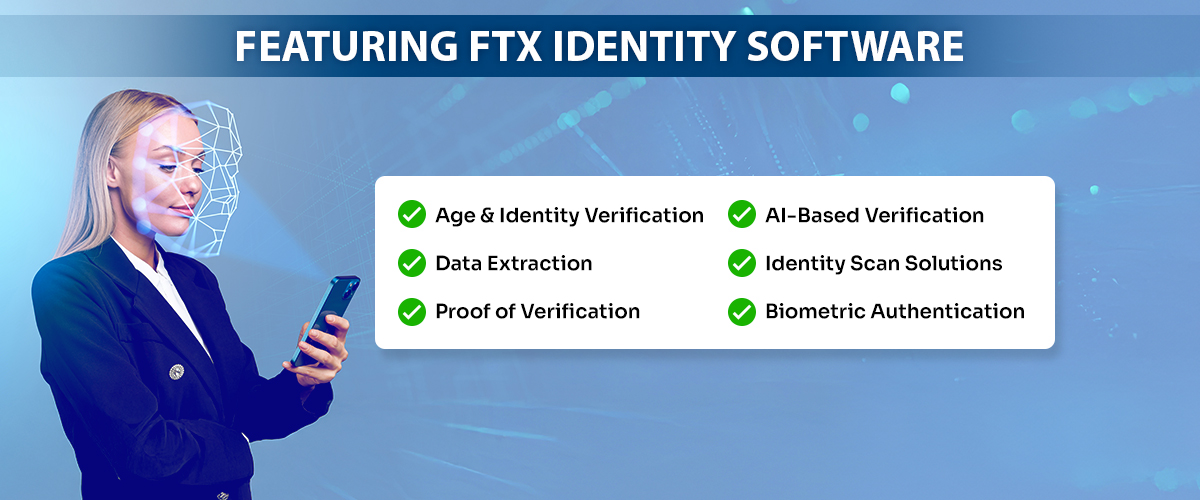
Reverification may sound daunting, but with the right tools and support, it can be seamless and highly effective. That’s where FTx Identity transforms your business operations with innovative solutions designed to meet your age and identity verification needs.
Robust and Reliable Verification Solutions
FTx Identity offers cutting-edge tools, including the Queue Feature, to make monitoring customer journeys and managing age verification effortless. From initial check-ins to final transactions, this feature streamlines the entire process.
Customers can verify their age using a mobile device through a retailer’s website, app, or a link sent by the POS system. Upon entering the store, facial recognition technology identifies the customer, and their profile automatically appears on the store’s POS system.
This allows employees to access tailored customer information, ensuring compliance while delivering a personalized and smooth in-store experience.
Simplify verification with FTx Identity’s biometric authentication – featuring selfie ID validation, facial recognition, and fraud prevention. Secure, fast, and user-friendly.
Seamless Integration with Existing Systems
FTx Identity fits seamlessly into your current infrastructure without any hiccups. Using easy-to-integrate APIs and customizable workflows, you can implement hands-free age verification and the Queue Feature without overhauling your systems. By inviting customers to register through in-app promotions, you’ll know exactly who’s shopping in your store before checkout. Match their profiles to their licenses in seconds for a stress-free and compliant transaction process – all while keeping operations efficient.
Expert Guidance and Support
Verification is not a one-size-fits-all solution. At FTx Identity, we understand that every business has unique challenges. That’s why we provide tailored guidance to ensure the Queue feature and other tools perfectly fit your needs. From onboarding and scaling to systems updates, our team supports you at every step, ensuring a hassle-free experience for both you and your customers.
Comprehensive Customer Journey Solutions
FTx Identity elevates age verification beyond simple compliance – it’s a tool for building trust, boosting efficiency, and enhancing satisfaction. Whether through hands-free check-ins, facial recognition upon entry, or tailored recommendations at checkout, we ensure every aspect of the customer journey is optimized for success.

Stay Ahead in Age-Restricted Industries
Industries with age restrictions are changing quickly, and companies need to evolve to stay competitive. Shifting from a single verification process to strong, ongoing reverification is now essential not just for compliance but as a crucial business strategy.
By implementing ongoing reverification, you reduce risks, enhance trust, and improve your brand reputation – all of which are critical for long-term success. And with solutions like FTx Identity, navigating this complex landscape becomes both easier and more effective.
Don’t leave your business vulnerable to outdated practices. Get in touch with FTx Identity today to explore how continuous customer reverification can strengthen your security, build trust, and set your business up for long-term success.
Stay Ahead of Compliance and Fraud
Protect your business and ensure you meet industry standards by adopting advanced customer reverification practices. With FTx Identity, you can simplify compliance, reduce fraud risks, and maintain trust without compromising user experience.