



According to the National Center for Health Statistics (NCHS), approximately 7% of U.S. adults used e-cigarettes daily or on some days in 2024. That gives us a snapshot of e-cigarette use across the country and helps explain why entrepreneurs may be interested in entering the market.
But starting an online vape business involves more than choosing products, building a website, and accepting orders. There’s quite a bit to consider before a customer ever reaches the checkout page.
One of the first things to understand is which products you can legally sell. The FDA currently lists 48 authorized e-cigarettes, and these are the only e-cigarettes that may be lawfully sold in the United States under federal law.
You’ll also need a reliable way to verify that customers meet the federal minimum purchase age of 21. And once an order is placed, there are additional requirements to consider, including which carriers can deliver vape products and how those orders must be handled.
If you’re exploring how to start a vape business online, this guide will walk you through the essentials, from choosing a business model and ecommerce platform to verifying customers, managing orders, understanding shipping requirements, and avoiding common mistakes along the way.
- Pick your sales channel before your platform. Many marketplaces restrict or prohibit vape products, so check their policies before deciding where to sell.
- Get written approval from your platform provider, payment processor, and carrier before launch. Each provider has its own requirements, and some may not work with vape businesses.
- Treat order review as part of compliance: flag unusual orders, re-verify accounts when appropriate, and log every decision.
- Under the Prevent All Cigarette Trafficking (PACT) Act, understand which registration, reporting, and recordkeeping requirements apply to your business.
- Review your rules on a schedule, because the FDA, state laws, and carrier policies can change.
Why Sell Vapes Online?
Selling vape products online gives you another way to reach adult customers without the expense of opening a physical storefront. Customers can browse products and place orders from home, while you have the opportunity to reach beyond your local market.
Here are a few advantages of selling vapes online:
- Lower Overhead Costs: Skip some of the expenses that come with a physical store, such as rent and utilities.
- Broader Reach: Connect with adult customers beyond your local area, wherever online vape sales are permitted.
- Flexible Inventory Management: Explore third-party fulfillment options to help manage storage and shipping.
- Smarter Marketing: Use website analytics and shopping trends to better understand what customers want.
- 24/7 Shopping Access: Give customers the freedom to browse and place orders whenever it’s convenient for them.
Understanding Vape Laws and Compliance
Selling vapes online is not merely about setting up a website and listing your products. It involves a strong understanding of both federal and state regulations and a commitment to responsible selling practices.
Federal Regulations
The Bureau of Alcohol, Tobacco, Firearms and Explosives (ATF) plays a key role in enforcing certain requirements for online vape sales under the PACT Act.
Here’s what sellers need to know when it comes to how to sell vapes online:
Monthly Reporting
Certain sellers must submit monthly reports to applicable state and local tax authorities. Reporting requirements depend on the type of sale and the jurisdictions involved, so check which obligations apply to your business.
Shipping
The Prevent All Cigarette Trafficking (PACT) Act prohibits the USPS from delivering vape products.
Private carriers also have restrictions on transporting these products, so sellers must confirm which carriers will accept their shipments and follow applicable delivery requirements, including age verification and adult-signature procedures.
For more details, review the ATF’s PACT Act guidance.
Age Verification
It’s important to use reliable age verification methods. This includes using age gating on websites to block underage visitors and ID checks to ensure customers are old enough to buy vape products.
State Regulations
Federal regulations lay the groundwork, but state regulations can differ greatly and make things complicated.
It’s very important to do your research on the specific laws and regulations in your state and even in your local area while learning how to sell vapes online. This helps you understand the requirements that may affect your business and where you’re permitted to sell.
Variations in Regulations
State regulations can vary widely, from different age verification needs to restrictions on certain products and licensing requirements. Some states might have tougher rules or additional bans on selling and distributing products.
These differences mean you must carefully investigate each state’s laws to avoid any issues and keep your business running smoothly.
Legal Consultation
Since state and local regulations can vary so much, it’s worth speaking with a lawyer who understands ecommerce and tobacco laws.
They can help you make sense of the requirements, identify rules that apply to your business, and avoid compliance issues that could lead to costly fines or other legal trouble.
Choose the Right Business Model for Your Online Vape Store
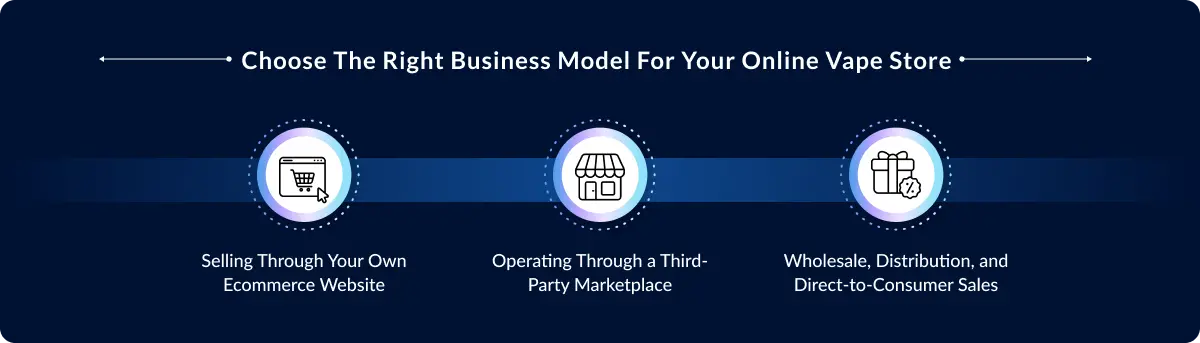
The first thing you need to do is to determine the business model because it helps determine which rules and requirements will apply. Most sellers choose one of three paths, and some combine them.
Each path changes how much of the compliance work lands on you. Our guide to selling age-restricted products in store and online covers the rules they share.
Selling Through Your Own Ecommerce Website
A website you own gives you control over product pages, checkout, and customer data. It also makes you the seller of record, so the legal duties are yours.
If you sell vape products directly to customers, you’re making what federal law calls delivery sales: orders placed online and shipped to the buyer. Depending on the sale and destination, this may require registration with the ATF and applicable state authorities.
Our guide to starting a tobacco ecommerce business walks through the licenses, taxes, and setup steps that apply here too.
The trade-off is workload. You’ll handle age checks, tax, shipping, and records yourself, but you also decide which states to serve and which products to carry.
Operating Through a Third-Party Marketplace
Marketplaces bring ready-made traffic, but most don’t allow nicotine vapes at all. Amazon, for one, prohibits them, and large platforms keep tightening their rules.
A marketplace may remove listings or suspend accounts when products violate its policies. You also have less control over customer relationships than you would through your own website.
Wholesale, Distribution, and Direct-to-Consumer Sales
Selling to licensed retailers is a different business from selling to shoppers. Business-to-business sales usually follow different shipping and verification rules than consumer delivery sales, but you still need to confirm that each buyer holds a valid license.
For a vape distributor ecommerce platform setup, build account approval into the store. Buyers upload their license, you check it, and only then do they see wholesale pricing and checkout.
Many businesses run both a wholesale portal and a consumer storefront. Keep the two checkouts separate, because the age checks, tax handling, and shipping rules differ.
A quick look at an ID photo won’t catch every fake. See how FTx Identity’s verification works, step by step, from ID capture to a pass or fail result.
Setting Up Your Online Vape Store
Starting an online vape business involves several important steps. You need to decide on vape products, choose the right ecommerce platform, set up reliable age verification, and obtain permits and licenses. Each step is key to building a successful online presence.
Types of Vape Products to Sell
1. Disposable Vapes: Single-use devices, pre-filled with e-liquid, that are typically discarded once the e-liquid runs out or the battery is depleted.
2. Vape Pens: Simple devices with replaceable cartridges or refillable tanks that can use a customer’s preferred e-liquid, also known as “vape juice.”
3. Pod systems: Compact devices with replaceable pods, offering a balance between ease-of-use and customization.
4. Vape Mods: Large “rigs” or “box mods” with customizable components with advanced features like variable wattage and temperature control. They may also offer more options for experienced users.
Select a Compliant Ecommerce Platform
When you compare ecommerce platforms for vaping, start with what each platform’s written policy allows. Templates and app stores matter much less than whether your account will still exist in six months.
Confirm the Platform Allows Vape Products
Go through the acceptable use policy of the platform and then request the support team in writing to find out whether nicotine vapes are allowed on the platform and in which countries. Keep the reply with you because rules change, and written confirmation gives you something to refer back to if questions come up later.
This is not a theoretical risk. A June 2026 news report said Shopify was expected to bar vapes from its U.S. platform, although Shopify hadn’t confirmed it at the time. Check the current policy of any platform before you build on it.
Evaluate Age Verification and Checkout Integration
It is important that your checkout system should not only display a notification but also put the order on hold until the buyer’s age is verified. Seek software that prevents checkout until verification is successful, records the result along with the order timestamp, and allows the buyer to resubmit their blurry photo.
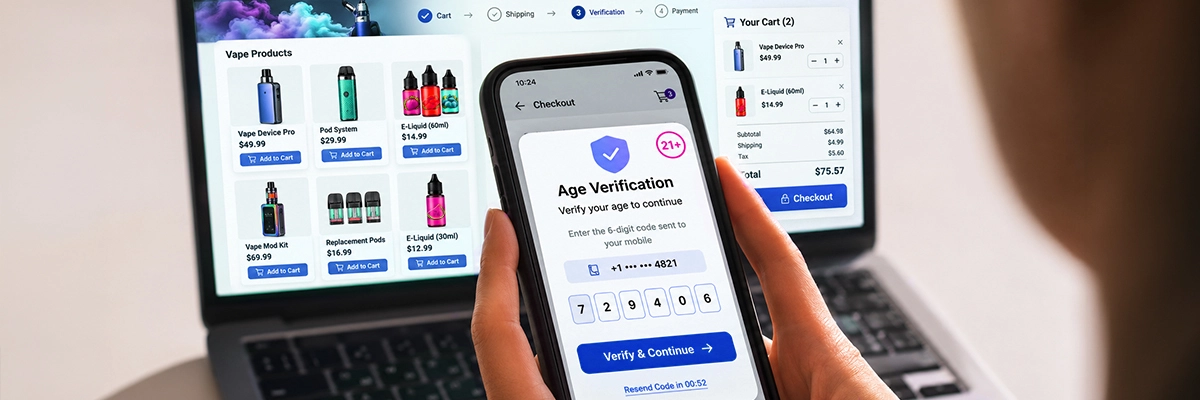
For vape age verification, FTx Identity’s age and identity verification reads a government ID, matches it to a live selfie, and can add a database check. FTx Identity says verification takes about six seconds and that 95% of users pass on the first try.
For a closer look at how sites run these checks, see our guide to how websites verify age.
Review Payment and Shipping Integrations
Payment processors classify vape businesses as high-risk, while a few go even further and deny them completely. Before opening your ecommerce store, make sure you’ve completed the required documentation with your payment processor. You may also need to prepare for higher processing fees or rolling reserves.
When it comes to shipping, check if your label printing system can append all necessary warnings on vape packages and can set up the adult signature option. Compare shipping options only among carriers that have confirmed they accept the types of vape shipments your business plans to send.
Configure Product Pages and Policies
List only products you’ve checked against the FDA’s authorized list, and state the age requirement on every product page. Add a shipping policy that names the states you serve and the delivery rules buyers will face, including any applicable adult-signature and proof-of-age requirements.
Skip health claims, such as saying a product is safer than smoking, since the FDA regulates those. Write a clear return and refund policy and a privacy policy that explains how you handle ID images.
Payment Processing Challenges & Solutions
Selling vapes online isn’t just about having a great product—it’s also about navigating the complex world of payment processing. Vape businesses are often labeled “high-risk” by banks and payment gateways, which can make accepting payments a headache.
Let’s break down why this happens and how to solve it.

Strict Regulations:
Vape sales are heavily regulated (e.g., FDA rules, PACT Act). Processors may be concerned about fines or legal action if a business doesn’t meet applicable requirements.
Age-Restricted Sales:
Selling to minors is illegal, and failed age verification can lead to chargebacks or penalties. Processors see this as a liability.
High Chargeback Rates:
Customers may dispute charges due to delivery issues or buyer’s remorse. Some even use stolen credit cards, increasing fraud risk. Chargebacks (when customers reverse payments) can create additional costs and put your processing account at risk.
Here’s how to protect yourself:
1. Use Fraud Detection Tools: Address Verification Service (AVS) can help confirm whether the customer’s billing address matches the address associated with their payment card.
2. Implement Clear Policies: Refund policies should make it easy for customers to understand how to request a refund and what to expect, helping prevent avoidable disputes.
How to Ensure Smooth Payment Processing for Online Vape Business
- Negotiate Fees: High-risk accounts often have higher fees (3–6% per transaction). Actual rates vary by processor, business risk, and transaction type, so ask about the full pricing structure and any available volume discounts.
- Maintain a Backup Plan: Understand your processor’s policies, keep your business documentation current, and know what steps to take if your payment account is suspended or your processing terms change.
- Stay Compliant: Update age verification and shipping practices regularly to keep your account in good standing.
Age Verification and Compliance Measures
The online vape industry demands an effective age and identity verification system to comply with laws and protect minors. Age gating
Specialized age verification software like FTx Identity can streamline this process. Age and ID verification tools cross-reference customer data with government databases, analyze ID documents, and perform real-time checks to confirm age without compromising user experience.
For instance, FTx Identity verification software protects a retailer’s business with:
- AI-based, multi-stage verification
- Supports ID documents from around the world
- Know Your Customer (KYC)/ Anti-Money Laundering (AML) compliant
- On-premise or off-premise verification
On the other side, FTx Identity benefits customers with:
- Self-registration with online ID scanning
- Verify your age online or offline
- Register via mobile app or website
- Use your digital ID at participating retailers
- Verify age with single-use QR codes
- Consent-based data sharing
Integrating age verification into the checkout process requires a seamless approach. You can start by embedding verification prompts before browsing or during checkout, using API-driven tools to scan IDs uploaded by customers, or validating information against trusted databases.
Finding the Best Vape Suppliers & Inventory Management

Once you’ve decided how to run your online vape store, you’ll need reliable suppliers and a way to keep track of inventory. Both play an important role in keeping products available and orders running smoothly.
You can start with dropshipping, where suppliers ship products directly to customers. This reduces upfront inventory costs but gives you less control over packaging, shipping times, and product quality.
Wholesale purchasing requires a larger upfront investment because you buy and store products yourself. However, it gives you more control over product selection and order fulfillment. Consider your budget, storage space, and business goals when choosing between the two.

Before working with a supplier, take time to check a few things:
- Product Authorization: Make sure products are legally authorized for sale in the United States.
- Quality Standards: Ask for documentation about product testing and quality.
- Reliability: Review shipping times, return policies, and supplier communication.
You’ll also want a simple way to monitor inventory. Tools such as Cin7 can help track stock levels and identify when it’s time to reorder. For products with expiration dates, such as e-liquids, use a First-Expired, First-Out (FEFO) approach to help sell older stock first.
Regularly check incoming shipments, review supplier performance, and keep inventory records up to date. These small steps can help prevent stock shortages, unnecessary purchases, and wasted products.
Marketing Your Online Vape Business
No matter how good your vape collection and other assorted products are, they aren’t going to sell by themselves. Marketing your online vape store will play a major role in driving revenue, building your brand, and running a successful business.
Let’s discuss a few strategies.
1. SEO & Content Marketing
Optimize your website for vape-related keywords like “best vape mods 2025,” “nicotine-free e-liquids,” or “how to clean a vape coil.” Use long-tail keywords to attract targeted traffic and create blog content addressing customer pain points.
For example, you may publish guides or video tutorials like “Vape Pen vs Box Mod: Which Is Right for You?” or “Coil Building 101” to boost engagement and improve search engine optimization (SEO) rankings.

2. Social Media & Influencer Marketing
Many mainstream platforms restrict or prohibit vape advertising. Before using social media, influencer partnerships, or customer-generated content to promote your products, review the platform’s policies and applicable advertising regulations.
3. Paid Advertising & Restrictions
Google Ads and Meta (Facebook/Instagram) prohibit vape promotions, but advertising restrictions can vary across platforms and networks. Review the policies of any advertising provider before launching a campaign, and don’t assume that a niche advertising network permits vape promotions.
Manage Orders, Customer Eligibility, and Fraud Risks
Age verification is an important part of online vape sales, but it’s not the only check worth making. Even when a customer passes an age check, an order may still contain details that need a closer look. Reviewing unusual activity before fulfillment can help identify potential fraud and prevent problems later.
Detect Suspicious Orders Before Fulfillment
Some fraud shows up in the order details rather than at the age check, so review orders before they reach the warehouse. Hold any order that trips a red flag until someone looks at it.
Common red flags include:
- Billing and shipping addresses that don’t match
- A name on the ID that differs from the name on the card
- Many orders to one address under different names
- A P.O. box or freight forwarder address, where an adult signature isn’t possible
- Unusually large quantities or rush shipping on a first order
- Several failed age checks followed by a pass
Address verification service (AVS) and card verification value (CVV) checks catch some of these automatically. The rest need a person with clear rules for what to do next.
Prevent Age Verification Bypass and Account Misuse
Passing verification once doesn’t make the next order safe. The usual gaps are borrowed IDs, shared logins, and photos of IDs or screens.
A selfie match with liveness detection makes it harder to use someone else’s ID or a photo of one. FTx Identity includes liveness and anti-spoofing checks, and its ongoing authentication confirms that the original account owner is the one logging in or checking out.
Re-check whenever there’s a significant change or activity that warrants another review, for instance, when a shipping address changes, a new device is used, a new payment card is added, or an exceptionally large order is made.
Getting an adult’s signature at the time of delivery is a good way of confirming things, but it is not what should be relied upon to carry out effective verification.
Document Order Decisions and Exceptions
Write down every decision that departs from the normal flow: orders held, canceled, approved after review, or shipped as an exception. A short log with the date, the reviewer, and the reason is enough.
Records also matter for federal reasons. The ATF says delivery sellers must keep delivery-sale records until the end of the fourth full calendar year after the sale and make them available to the ATF, state and local tax agencies, and state attorneys general.
Keep the verification result, its timestamp, and the delivery signature with each order. Store ID images securely, and ask your lawyer how long privacy laws let you keep them.

Handle Returns, Refunds, and Disputed Orders
Returns are harder for vapes than for most products, because a return is also a shipment. Decide your policy before the first complaint arrives.
Your return policy should explain how you’ll handle opened products, damaged items, and incorrect orders. Make sure it follows applicable consumer protection laws and carrier restrictions, especially if a product needs to be shipped back. Spell this out on the product page and in your policy.
In case of a chargeback, the processor needs to be provided with age verification records, tracking details, and evidence of the delivery method. Keeping these records together can help provide supporting documentation if a customer disputes a transaction. Having a high rate of chargebacks can jeopardize your processing account.
Understand Vape Shipping and Delivery Requirements
Shipping is where the law gets more specific and where new sellers usually run into trouble. Learn these laws before you choose a shipping method or give an arrival date.
Understand the PACT Act and USPS Restrictions
The PACT Act was amended in 2020 to extend certain requirements to electronic nicotine delivery systems (ENDS), including covered vape products. Those amendments took effect in 2021. The law prohibits sellers from using USPS to deliver covered vape products.
Depending on the type of sale and destination, sellers may need to register with the ATF and applicable state authorities. Check which requirements apply to your business before shipping. For additional guidance, review the ATF’s Vapes and E-Cigarettes page.
Covered sellers may also have requirements to:
- Verify each customer’s full name, birth date, and home address against a commercially available database.
- Mark every package with the federal warning label the ATF specifies.
- Report shipments to applicable state and local tax authorities. Required reports are generally due by the 10th of each month for covered sellers and jurisdictions.
- Pay the state and local excise taxes that apply to each sale.
- Follow the destination state’s and city’s laws as if the sale happened there.
Confirm Carrier Eligibility Before Shipping
With USPS mostly off the table, you’ll need a private carrier that accepts vape shipments to consumers. UPS and FedEx have restricted consumer vape deliveries, and a carrier’s own policy can be stricter than federal law.
Before you commit, ask each carrier or fulfillment partner four questions:
1. Do you accept vape packages from my business?
2. Do you deliver them to consumers, or only business-to-business?
3. Do you offer adult-signature delivery for customers 21 or older?
4. Will you put these terms in a written agreement?
Never mislabel a package or hide its contents to get around a carrier’s rules. It can end your carrier account and add legal trouble.
Apply Required Age and Delivery Controls
For covered delivery sales, age and identity checks may be required both when the customer places the order and when the package arrives. At purchase, verify the customer’s information against a commercially available database. At the door, require an adult signature and proof of age, as applicable.
Set the label to adult signature required, and turn off any option that allows unattended drop-offs, such as a porch, a locker, or a mailbox. If the driver can’t confirm that the recipient is 21 or older, the package should go back to the carrier, not stay at the door. Ask the carrier how its drivers check ID, and put that process in your agreement.
Manage Tracking, Returns, and Shipping Records
Shipping records settle most disputes, so save them with the order: the tracking number, a copy of the label, the signature, and the date and time of delivery.
Use these records to help prepare any required monthly reports and respond to “never arrived” claims. Also set a process for packages that are refused or returned undelivered, including who inspects them and where they’re stored. These files fall under the same record-keeping rule covered earlier.

Customer Support & Retention Strategies
To stand out amid fierce competition between online vape retailers, you must tap into conventional and non-conventional methods to connect with your customers and give them a positive experience.
Here are a few ways:
1. Loyalty Programs & Subscriptions
If permitted by applicable laws and platform policies, reward repeat buyers with points redeemable for discounts or free products. Offer subscription boxes for e-liquids or coils, where permitted and where your shipping arrangements allow them.
2. Customer Service Excellence
FTx offers 24/7 support so customers can get help when they need it.
Train your team to handle disputes with patience and professionalism, offering refunds or replacements for damaged items in accordance with your return policy and applicable requirements. Collect feedback through post-purchase surveys to identify pain points.

3. Community Building
If you use email newsletters, online groups, or other customer communities, make sure the content and any promotional messages follow applicable laws and platform policies.
Host virtual events (e.g., coil-building workshops) or create a members-only Facebook group only where the platform permits this type of content.
Common Mistakes to Avoid When Selling Vapes Online
Some compliance mistakes happen because important details are overlooked or the same issues keep coming up. Taking time to review your processes can help you avoid preventable problems, account disruptions, and costly penalties.
Relying Only on Self-Reported Age
A pop-up that asks, “Are you 21?” or for a birth date stops no one who is willing to type a different year. That’s an age gate, and federal delivery rules call for a database check of the buyer’s name, birth date, and address. Our article on age gating versus age verification explains the difference. Keep the gate as a notice, and use verification as the control.
Listing Products Without Verifying Their Legal Status
Just because a certain product is available on other websites does not mean that it is legal to sell. The only e-cigarettes permitted are those that have been authorized by the FDA, and even then, authorization applies to particular products, meaning that having the brand name of an authorized e-cigarette will not be enough.
Ensure that each product, flavor, and device matches up with the FDA’s list of authorized products when you bring a new product for sale and every time you restock.
Shipping to Restricted Locations
Some states and cities restrict or prohibit consumer vape shipments, and the rules differ by product type. Build a block list into checkout by state, and by ZIP code where needed, then review it often.
Also confirm that your carrier serves the destination. Don’t ship internationally without checking export and import rules first.
Ignoring Recordkeeping and Regulatory Updates
Missed monthly reports, lapsed registrations, and outdated product lists are quiet mistakes that surface during an audit. Put each deadline on a shared calendar with a named owner.
Check the FDA list, your state’s rules, and your platform and carrier policies at least once a quarter, and again after any news of a law change.
Wrapping Up
Starting an online vape business can be an exciting opportunity, but there’s plenty to think about along the way. From choosing the right products and suppliers to understanding age verification, shipping, and legal requirements, taking the time to plan ahead can make the process much easier to navigate.
Building a successful store also means finding appropriate ways to reach adult customers, creating a positive shopping experience, and making sure orders are handled responsibly. As regulations and industry requirements change, staying informed and keeping your business practices up to date will be just as important as managing day-to-day operations.
You don’t have to figure everything out at once. Start with a clear understanding of the rules, build relationships with reliable suppliers, and put the right processes in place as your business grows. A thoughtful approach to compliance and customer service can help you build a business that’s prepared for the long term.
Ready to Take Your Vape Store Online?
Build an ecommerce experience with integrated age verification, connected checkout
tools, and the flexibility to support your growing online business.