


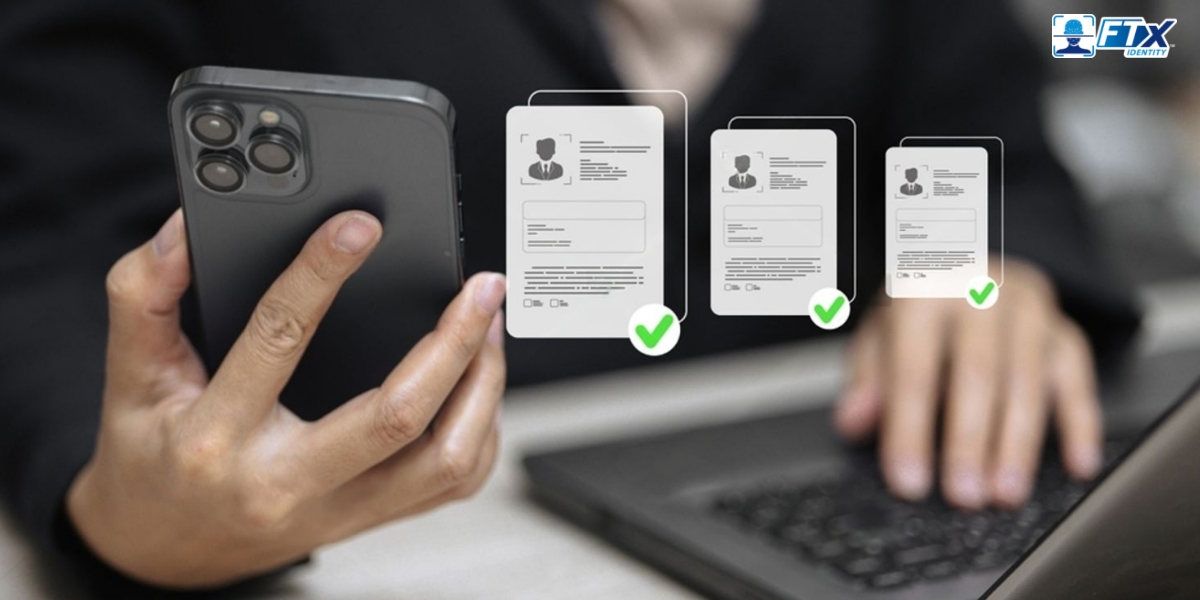
For many retailers, proof of address (POA) verification sits in a gray area. It’s not always required, but when it is required, failing to handle it correctly can expose your business to compliance issues, fraud losses, chargebacks, and delivery failures.
Retailers and compliance teams should understand when POA verification is actually necessary, how it works in practice, and what risks come with relying on address documents alone.
In this guide, we’ll break down how proof of address verification works, which documents are commonly accepted, why verifications fail, and the best practices retailers should follow to balance compliance, fraud prevention, and customer experience.
What Is Proof of Address Verification?
From a retailer’s perspective, this type of verification is the process of confirming that a customer genuinely resides at the address they claim.
In compliance and identity verification contexts, POA verification is often used as a supporting check rather than a standalone identity confirmation.
Definition
Proof of address verification validates a customer’s residential address using documents or data sources that link the individual to a physical location. This may include document-based checks, database validations, or non-documentary data signals.
How Proof of Address Differs from Other Verifications

- Identity verification confirms who the customer is, such as their name, date of birth, and government-issued ID.
- Age verification confirms how old the customer is, typically for age-restricted product sales.
- Proof of address verification confirms where the customer lives.
Each plays a different role, and just verifying an address is rarely enough by itself.
Why Retailers Are Sometimes Required to Verify Addresses
Proof of address isn’t required for every transaction, but it’s essential for compliance, fraud prevention, and high-risk purchases. Verifying addresses helps protect your business while ensuring sensitive customer data is handled safely and responsibly.
Compliance and Age-Restricted Regulations
Retailers selling age-restricted products—such as alcohol, tobacco, vaping products, or regulated supplements—may be required to verify a customer’s address to comply with local, state, or federal regulations. This is especially relevant for online sales and home delivery.
High-Risk Payment Transactions
High-value purchases, unusual buying behavior, or mismatches between billing and shipping data can trigger address verification requirements as part of risk management and payment compliance.
BNPL Requirements
If a retailer offers Buy Now, Pay Later (BNPL) options for high-value products, address verification may be required before installment approval—particularly for new customers or unusually large purchases. Verifying the customer’s address helps confirm residency and financial stability before extending credit.
Fraud Prevention and Chargeback Reduction
Consider an online retailer that notices repeated orders using the same payment method but different shipping addresses each time. Address verification can help flag this pattern early, allowing the retailer to intervene before chargebacks, inventory loss, or account abuse occurs.
E-commerce Shipping and Delivery Rules
Retailers shipping age-restricted items must often verify delivery addresses before fulfillment to comply with shipping partner policies and avoid regulatory penalties. Failure to do so can result in failed deliveries, fines, or account termination.
Data Sensitivity
Addresses are considered sensitive personal data. Regulations often require retailers to justify why address data is collected, how it’s used, and how it’s protected—making structured verification processes essential.
Learn why continuous customer reverification is becoming essential for compliance in age-restricted ecommerce
and other high-risk markets.
How Proof of Address Verification Works
Modern POA verification typically follows a structured, multi-step process designed to balance accuracy, speed, and customer experience. Rather than relying on a single check, retailers use a combination of data capture, validation, and risk assessment to make informed decisions in real-time.
Data Capturing
The process begins when the customer submits their address information, either by manually entering details or by uploading a supporting document during checkout, account creation, or onboarding. In some cases, address data may also be collected automatically through trusted data sources to reduce friction and input errors.
Validation & Cross-Checking
Once captured, the address data is validated against trusted sources, document authenticity rules, or third-party databases. This step checks for consistency across formats, confirms that the address exists, and helps detect signs of tampering or fabricated POA documents. Any mismatches or anomalies are flagged for further review.
Risk Scoring & Decision
Results from all validation checks are then aggregated to generate a risk score. Based on predefined risk thresholds, retailers can automatically approve low-risk transactions, flag higher-risk cases for manual review, or reject transactions that fail verification. This approach allows businesses to apply stronger controls where needed without slowing down every customer interaction.
Types of Documents Accepted for Proof of Address
To help reduce fraud and keep verification consistent, retailers typically accept a limited set of documents for proof of address. These documents should clearly show the customer’s full name, current residential address, and a recent issue date to be considered valid.
Government-Issued Documents
Certain government-issued correspondence, such as tax notices or official letters from government agencies, may qualify as proof of address if they clearly display the customer’s name and address. These documents are generally considered reliable due to their official source.
Driver’s License
In some cases, a driver’s license can be used as proof of address, provided the address is current and matches other verification data. Because licenses are often used primarily for identity verification, retailers may still require additional checks to ensure accuracy.
Utility Bills
Recent utility bills—such as electricity, water, gas, or internet statements—are among the most commonly accepted proof of address documents. They directly link an individual to a residence and are issued regularly, making them useful for confirming ongoing occupancy.
Check out our guide on how to detect a fake utility bill it walks through the key red flags
and verification tips every retailer should know.
Bank or Credit Card Statements
Bank or credit card statements issued within the last few months are often accepted due to their reliability and consistent issuance. To protect customer privacy, sensitive financial details should be masked or hidden whenever possible.
Rental / Lease Agreements
Rental or lease agreements can help confirm residency, particularly for long-term tenants. However, because these documents are easier to alter or forge, many retailers treat them as supporting documents rather than primary proof of address.
Proof of Address Fraud Risks Retailers Face
While proof of address verification can reduce risk, it also introduces its own set of fraud challenges—especially when retailers rely too heavily on document-based checks without additional validation layers.
Fake Utility Bills
Utility bills are among the most commonly forged proof of address documents. Fraudsters can easily manipulate legitimate bills or create fake ones using basic editing tools, adjusting names, addresses, or dates to appear current and authentic at first glance.
Purchased Document Templates
Ready-made proof of address templates are widely available online and can be customized in minutes. These templates closely mimic legitimate documents, making it difficult for manual reviews or basic checks to identify fraud without automated validation.
Address Recycling Across Identities
In organized fraud schemes, the same address is often reused across multiple fake or synthetic identities. While the address itself may be real, its repeated use across different profiles is a strong indicator of coordinated fraud activity.
Why POA Is a High-Risk Signal When Used Alone
An address by itself does not confirm identity. Fraudsters can obtain access to valid addresses through public records, data breaches, or social engineering—without ever residing there. This makes POA a weak signal when not paired with other verification methods.
How Fraud Rings Exploit Weak Document-Only Checks
When retailers rely solely on document uploads without cross-checking or risk analysis, fraud rings can scale attacks quickly by reusing altered documents across multiple accounts or transactions. This lack of layered controls creates an easy entry point for repeat abuse.

Connection to Broader Identity Fraud
Proof of address fraud is rarely isolated. It often ties into broader identity fraud schemes, including synthetic identity creation, account takeovers, and payment fraud—magnifying financial losses and compliance risk for retailers.
When Non-Documentary Address Verification Is a Better Option
In many cases, asking customers to upload proof of address documents adds unnecessary friction. Non-documentary address verification validates address information in the background using trusted signals, helping retailers reduce fraud while keeping the customer experience fast and seamless.
and streamline verification workflows.
What Non-Documentary Verification Means
Non-documentary verification confirms a customer’s address using trusted data sources and behavioral signals rather than uploaded documents. It evaluates whether the address exists, whether it’s commonly associated with the customer, and whether it aligns with other known data points—all without interrupting the checkout or onboarding flow.
Examples of Alternative Signals
-
Data Bureau Address Validation
Address details are cross-checked against trusted data bureaus and reference databases to confirm validity and historical association. -
Device and IP Consistency Checks
Device information, internet protocol (IP) addresses, and network signals are analyzed to ensure they align with the claimed address. Significant mismatches can indicate higher risk. -
Transactional and Behavioral Data Analysis
Purchase history and account behavior are reviewed to identify unusual patterns that may suggest address misuse or fraud.
Best Practices for Retailers Implementing Proof of Address Verification
Implementing this kind of verification isn’t just about meeting requirements—it’s about protecting your business without creating friction.
These best practices help retailers balance fraud prevention, compliance, and a smooth customer experience:
Use Multi-Layered Verification
Proof of address works best when it’s part of a broader verification strategy. Combining POA checks with identity verification, age verification, device signals, and payment data creates a more complete risk picture and makes it harder for fraudsters to slip through.
Learn how it all fits together and protects your business.
Standardize Accepted Document Lists
Set clear guidelines around which documents are acceptable and how recent they must be. This helps reduce confusion for customers, ensures consistency across reviews, and limits the risk of outdated or easily manipulated documents being used.
Automate the Verification Workflow
Automating POA checks wherever possible speeds up decision-making and reduces reliance on manual reviews. It also improves accuracy by applying consistent rules and frees up staff to focus on higher-risk cases.
Avoid Over-Collecting Sensitive Data
Only collect the information you actually need. Limiting data collection not only reduces compliance and security risks but also builds customer trust by respecting privacy.
Implement Strong Data Security and Encryption
Address data is sensitive and should be protected accordingly. Use encryption, role-based access controls, and secure storage practices that align with regulatory requirements to safeguard customer information.
Build a Smooth User Experience
Clear instructions and intuitive workflows go a long way. Guide customers through each step of the verification process so it feels simple, fast, and transparent rather than burdensome.
and boost compliance.
Maintain Transparent Communication
Let customers know why proof of address is required and how their data will be used and protected. Transparency helps reduce friction, improves completion rates, and reinforces trust in your brand.
Conclusion
Proof of address verification helps protect retailers from fraud, delivery failures, and compliance violations—but only when implemented thoughtfully.
By combining POA checks with automated, multi-layered verification strategies, retailers can significantly improve accuracy, reduce customer friction, and meet regulatory expectations without slowing down the buying experience.
Smarter identity verification starts with the right foundation. FTx Identity helps
businesses reduce fraud, support compliance, and keep customer experiences seamless.
Contact our team to book a consultation and see a demo.