


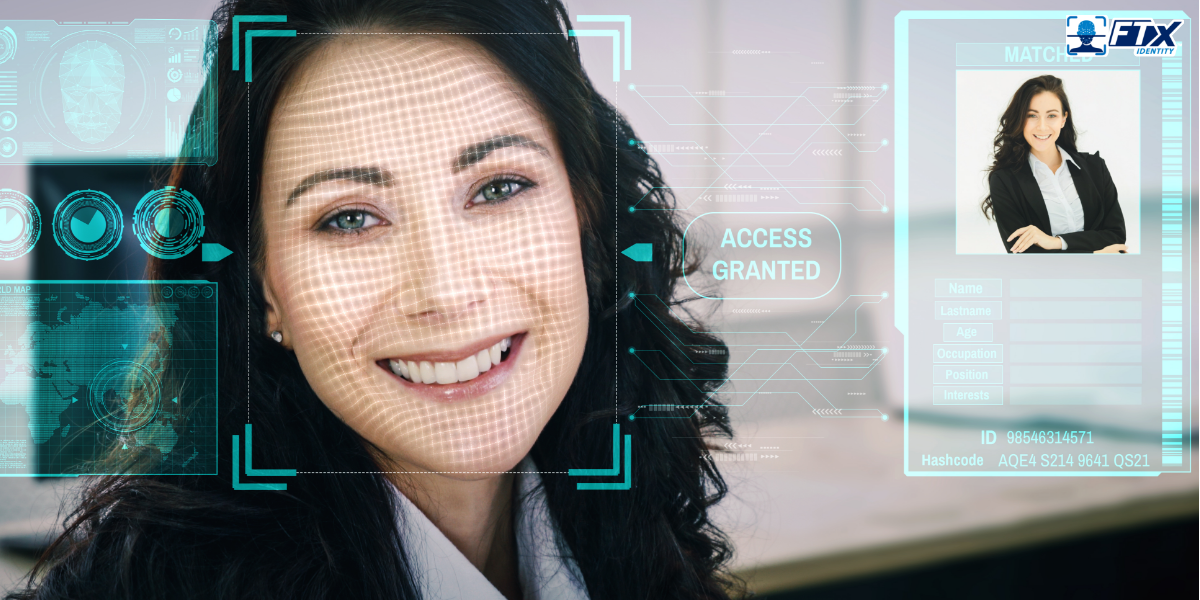
How secure is your customer facial recognition system? What if a bad actor used a photo to “spoof” your customer? Would your system catch it?
Online transactions have come a long way. However, digital thieves have developed sophisticated ways to bypass them, like spoofing. And that’s why liveness detection is necessary.
According to Deloitte, synthetic identity fraud will generate at least $23 billion in losses by 2030. We have a foolproof plan for you. Contact us to get started.
Liveness detection refers to technology that confirms that the user is a real, live person. It detects eye movements and head rotation and uses 3D depth perception to determine that the user is there and not a photograph.
The result: improved security and a significant reduction in deepfake and spoofing attacks. For businesses, liveness detection is an important tool for online age verification systems. It builds trust, protects your customers, and is an effective digital fraud prevention tool.
What Is Liveness Detection?
The story of liveness detection, dating back to 1950, is a narrative that’s compelling. Alan Turing first coined the mechanism shaping this process. He conducted an experiment that would test the ability of a machine to exhibit intelligence during an imitation game, later named the Turing test.
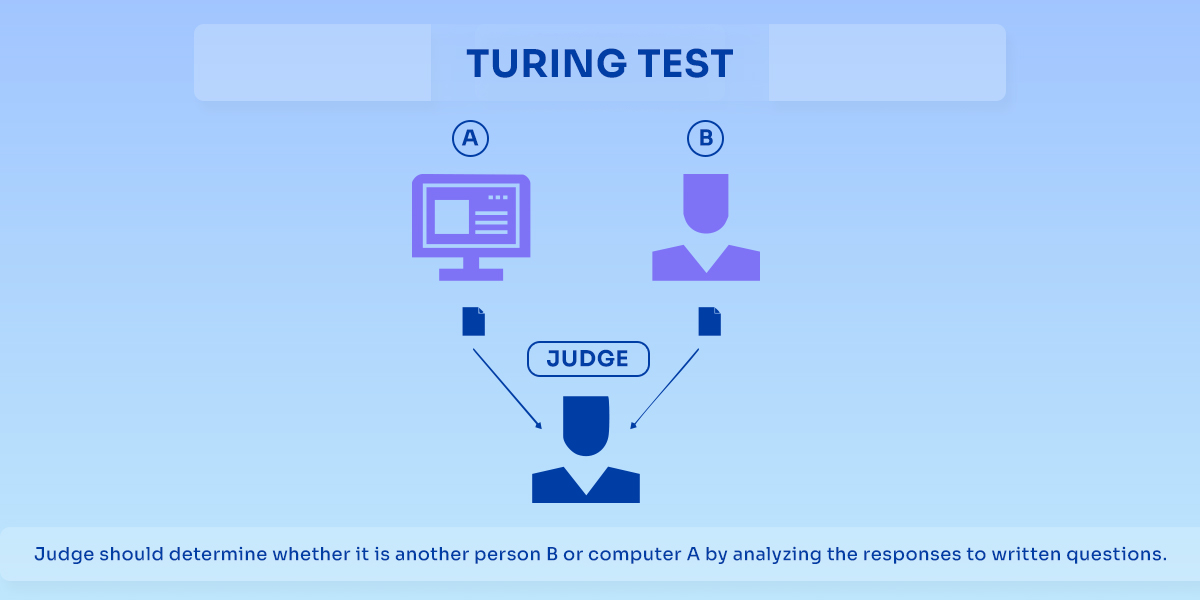
Turing wanted to make a machine so clever that you can’t tell it apart from a person. But how do you put things in motion? Well, you’ve got someone – let’s call them the judge – sitting in a room. They’re typing questions, and they’re getting answers back. Now, on the other side of the wall, there’s a real person and a computer. The judge has to figure out which is which just by reading the answers.
If the judge reads the responses and says that they have been made by a human, and if the judge is wrong, then the machine has won.
Now, fast forward a few decades. Turing’s approach can now be used on a more serious level. How does one confirm it’s really “you” online? There’s no tricking the judge anymore. We are trying to keep things safe and private.
Many online age verification systems use photo authentication. You provide your driver’s license and then take a photo, which is verified against your ID photo.
Liveness detection, or spoof detection, systems take this a step further. While taking a photo, a liveness check is performed that uses visual evidence to ensure you aren’t taking a photo of a photo. You might be asked to move the camera, for example, to provide a 3D representation, which helps confirm that you are a real, live person. Some benefits include:
- Combats Spoofing: Attempts to catch fake facial representations like photos, videos, or masks.
- Multiple Techniques: Analyzes eye movement, head rotation, 3D depth perception, and even subtle facial expressions to verify liveness.
- Safeguards Sensitive Data: Protects users’ personal information.
Liveness Detection vs. Liveness Verification
These two terms are often used as if they mean the same thing. They do not. Understanding the difference is important for anyone building a security system.
Liveness verification is the simpler of the two. It checks if a physical person is present. Think of a basic system that asks you to blink or turn your head. That action confirms you are there. It is a moment-in-time check.
Liveness detection is broader and more continuous. It does not just confirm presence. It analyzes the quality of that presence over a short period. It looks for microexpressions, the subtle shift in skin texture under light, and the involuntary movement of eyes. It builds a case that this is not just a person, but that person acting naturally in real time.
The distinction matters for fraud prevention. A sophisticated attacker can pass a simple liveness verification. They can hold up a phone playing a video of someone blinking. They can wear a latex mask that moves. Liveness verification sees the blink and says pass. Liveness detection sees the lack of natural skin reflection; the odd way light hits the mask and flags the attempt.
In practical terms, liveness verification is a checkbox. Liveness detection is an investigation.
Purpose and Growing Need for Liveness Detection
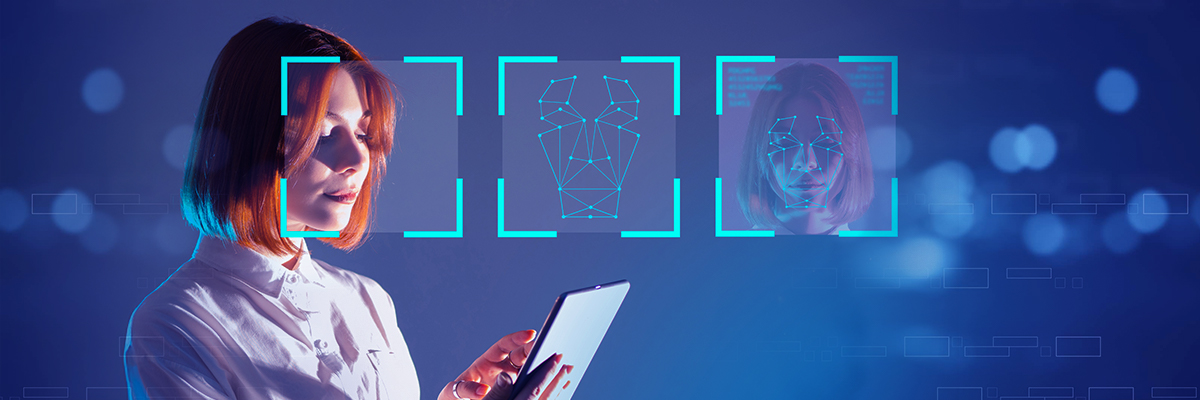
Everything is digital now. But here’s the thing: the more we put our lives online, the more we need to make sure things are secure. And that’s where liveness detection comes in.
Rising Security Concerns in Digital Identity Verification
We trust computers to decide if someone’s really them based on a picture and some data. That’s a huge responsibility. And sadly, there are always people out there trying to game the system. You’ve probably heard stories – someone uses a fake ID or holds up a photo of someone else to fool a facial recognition system. That’s not a minor hiccup; it can cause grave problems like identity theft, fraud, and all sorts of illegal activities. This makes digital identity verification all the more important and worth paying attention to.
What Are the Key Types of Biometric Spoofing Attacks?
To understand why liveness detection matters, you have to understand what it defends against. Spoofing attacks are not theoretical. They happen every day.
1. Facial Recognition Spoofing Attacks
This is the most common category you hear about. Attackers try to trick a camera into seeing a face that is not really there.
The simplest version uses a printed photo. Someone holds up a high-quality picture of an authorized user. Basic systems fall for this.
Next comes a video replay. An attacker plays a video on a phone or tablet and holds it up to the camera. If the system looks for motion or blinking, the video provides it.
Then there are masks. These range from cheap Halloween quality to hyperrealistic silicone replicas. Some are so detailed they include individual pores and fake hair. A camera alone might not spot the difference.
Deepfakes represent the cutting edge. These are AI-generated videos that map one person’s face onto another’s body in real time. An attacker could use deepfake software during a video call, making it look like someone else is speaking.
2. Fingerprint Spoofing Attacks
Fingerprints seem personal and hard to fake. They are not.
A basic method uses gelatin or silicone. An attacker lifts a fingerprint from a glass surface, creates a mold, and pours a gelatin copy. Many fingerprint sensors read gelatin as easily as skin.
More advanced approaches use conductive ink or printed circuits to mimic the electrical properties of a real finger. Some attackers have even used wood glue or candle wax with surprising success.
The vulnerability is that most consumer sensors only check the fingerprint pattern. They do not verify that the finger has blood flowing through it or that the skin is alive.
3. Iris Recognition Spoofing Attacks
Iris scanning is often marketed as the most secure option. It is not immune.
Early attacks used high-resolution printed images of an eye held up to the scanner. Some systems fell for this.
Next came contact lenses printed with fake iris patterns. An attacker could wear a lens that matched a victim’s iris pattern.
More sophisticated methods use artificial eyes. Researchers have created realistic prosthetic eyes with printed irises that fool some scanners. Others have extracted iris images from databases and replayed them through digital displays.
The lesson across all these methods is simple. No single biometric is unbreakable. The security comes from layering and from active liveness detection that catches the gaps between a real person and a fake representation.
How Liveness Detection Works
Let’s break down the process of how liveness detection works step by step.

The journey begins with capturing the user’s image. This initial step is critical, as the quality of the image directly impacts the accuracy of subsequent analysis.
Step 1. Camera Types (2D vs. 3D Cameras)
- 2D cameras capture flat images, relying on texture and motion analysis. They’re common but can be susceptible to sophisticated spoofing.
- 3D cameras, equipped with depth sensors, capture detailed 3D representations of the face. This provides a richer dataset, enabling more accurate depth and shape analysis.
Step 2. Data Preprocessing
The captured image isn’t ready for analysis; it needs refinement. This step cleans and prepares the image for feature extraction.
- Noise Reduction: Eliminating artifacts and distortions that can interfere with analysis. This ensures that the system focuses on relevant facial features.
- Image Normalization: Standardizing the image’s lighting, contrast, and orientation. This ensures consistency and comparability across different captures.
Step 3. Feature Extraction
This is where the system identifies and extracts key facial features that differentiate a live person from a spoof.
- Face Shape, Texture, Reflection: Analyzing the contours, surface details, and light reflection patterns of the face. This helps detect anomalies that indicate a spoof.
- Eye Movement Tracking: Monitoring subtle eye movements, including blinking and pupil dilation. This can identify inconsistencies that suggest a static image or video.
- Skin Tone Consistency Check: Assessing the uniformity of skin tone and texture. This helps detect artificial skin or masks.
Step 4. Liveness Analysis Techniques
This is the core of liveness detection, where the extracted features are analyzed to determine authenticity.
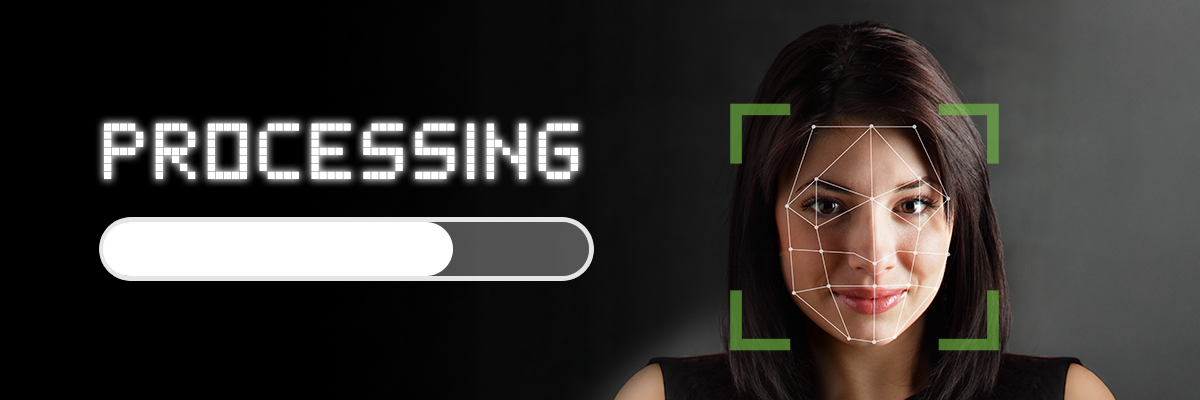
2D vs. 3D Depth Mapping
1. 2D analysis focuses on texture and motion.
2. 3D depth mapping creates a detailed 3D model of the face, enabling precise depth analysis.
AI-Driven Anti-Spoofing Detection: Advanced AI algorithms analyze the extracted features, looking for patterns and anomalies that indicate a spoof. These algorithms are trained on vast datasets of real and fake faces, enabling them to detect even subtle signs of spoofing.
Step 5. Decision Making & Authentication
The final step involves making a decision based on the analysis.
- Confidence Scoring in Liveness Detection: The system assigns a confidence score to the liveness assessment. A high score indicates a high probability of a live user.
- Machine Learning Model Validation: The decision is validated against machine learning models trained to recognize liveness. This ensures accuracy and reliability. This step is about providing a quantified measure of certainty.
The process of liveness detection is a complex interplay of image processing, feature extraction, and AI-driven analysis.
Compliance Requirements for Liveness Detection
Liveness detection is not just a technical choice. It is increasingly a legal one. Governments and regulators are paying attention to how companies verify identity, and they are writing rules that demand more than a simple photo check.
1. Integrating Legal Requirements with Ethical Best Practices
The legal landscape for biometric data is fragmented. Europe has the General Data Protection Regulation (GDPR), which treats biometric data as sensitive and requires explicit consent. The United States has a patchwork of state laws, with Illinois leading the way through BIPA, the Biometric Information Privacy Act. Other countries are developing their own frameworks.
Compliance means understanding every jurisdiction where your customers live. A system that meets GDPR standards may not automatically satisfy BIPA requirements. The safe approach is to build for the strictest standard and scale down where permitted.
Beyond the law lies ethics. Just because you can collect certain data does not mean you should. Ethical liveness detection minimizes data collection, retains nothing longer than necessary, and gives users genuine control over their information.
2. Data Storage, Privacy, and Security Compliance Measures
The moment you capture a biometric sample, you have a responsibility. That data is uniquely sensitive. A password can be changed. A face cannot.
Storage requirements vary by regulation. Some frameworks demand that biometric data be stored locally on the user’s device, never transmitted to a central server. Others allow cloud storage but require strong encryption and strict access controls.
Deletion policies matter too. Many regulations require that biometric data be deleted after a specific period or once its purpose is fulfilled. Building automatic deletion into your system from the start prevents compliance headaches later.
3. Strengthening Trust Through User Consent and Visibility
Consent cannot be buried in terms of service nobody reads. It must be explicit, informed, and revocable.
Users should know exactly what data is being collected, how it will be used, how long it will be stored, and who has access. They should be able to withdraw consent and have their data deleted without jumping through hoops.
This visibility builds trust. When users understand that liveness detection protects them rather than surveils them, they accept it more readily.
4. Regular Audits and Assessments
Compliance is not a one-time achievement. It requires ongoing attention.
Regular internal audits check that systems still meet regulatory requirements as those requirements evolve. External assessments by third-party security firms provide an objective view of vulnerabilities.
Penetration testing specifically for liveness detection is valuable. Ethical hackers attempt to spoof the system using the latest techniques. Their findings reveal gaps before real attackers find them.
5. Adapting Quickly to New Compliance Expectations
Regulations around biometric data are evolving rapidly. What is compliant today may be insufficient tomorrow.
Building flexibility into your compliance framework helps. That means choosing technology partners who stay current with regulatory changes. It means designing systems that can adapt to new requirements without complete overhauls.
The companies that treat compliance as a static box to check will eventually find themselves on the wrong side of a regulatory action. The ones that treat it as an ongoing practice will stay ahead.
Key Industries Using Liveness Detection
Liveness detection is something that no industry can afford to sleep on. It’s a security layer that’s becoming a must-have across a spectrum of industries. Forget the generic “digital transformation” buzzwords. This is about real-world, high-stakes applications where identity verification is non-negotiable.
1. Banking & Finance
The financial sector, perpetually under siege from sophisticated fraud, has embraced liveness detection as a core component of its defenses. And it is one of the major industries where frauds occur significantly more.

2. eKYC
Gone are the days of physically hauling documents to a branch. Opening a bank account online is now a reality, but it comes with inherent risks. Liveness detection ensures the person applying is genuinely who they claim, not an identity thief using stolen credentials. The tech scrutinizes facial features, analyzes micro-movements, and detects subtle signs of spoofing, all in real time.
3. Fraud Prevention
Beyond account opening, liveness detection acts as a vigilant sentinel against fraudulent transactions. Whether it’s preventing unauthorized access to accounts, detecting synthetic identity fraud, or thwarting account takeover attempts, this technology adds a crucial layer of security. Suppose someone is trying to access your account with a deepfake video – liveness detection can be the difference between a successful breach and a thwarted attempt.
4. Cryptocurrency & Blockchain
The decentralized nature of cryptocurrency and blockchain, while revolutionary, also presents unique security challenges. In a world where trust is often code-based, verifying identities is paramount.
5. KYC and AML Compliance
Regulatory pressures are mounting, demanding robust KYC (Know Your Customer) and AML (Anti-Money Laundering) measures. Liveness detection helps crypto exchanges and blockchain platforms meet these requirements, ensuring compliance and preventing illicit activities.
6. Fraud Prevention and Account Security
Scams, hacks, and fraudulent transactions are rampant in the crypto space. Liveness detection adds a layer of security, verifying users during onboarding and transactions. This protects users from phishing attacks, account takeovers, and other forms of fraud.
Applications & Use Cases
Liveness detection is a practical technology with real-world applications ranging over multiple industries.
1. Ecommerce
Selling alcohol, tobacco, or even certain video games online is a tightrope walk. You’ve got to make absolutely sure you’re not selling to minors. A simple “I’m over 21” checkbox just doesn’t cut it. You need real proof. Liveness detection analyzes facial features, movement, and other subtle cues to confirm the buyer’s age in real time. It’s about protecting your business from legal trouble and, more importantly, protecting young people.
2. Tobacco Stores
Self-checkout kiosks are a boon for convenience, but they can be a headache for age-restricted sales. You can’t just rely on a customer’s honesty. That’s where face verification technology with liveness detection comes in—it integrates seamlessly with these systems, scanning the customer’s face, checking for signs of life, and comparing it against age databases, all within seconds.
3. Online Gaming
Online gaming isn’t just fun and games. It’s a massive industry with a lot of potential for abuse. Gaming platforms need to keep things fair and safe. Liveness detection helps them verify players’ identities, ensuring that everyone’s playing by the rules. It keeps the game clean and the community protected.
4. Convenience Stores
Quick trips to the convenience store shouldn’t mean bypassing age verification. When customers are buying age-restricted goods, it is important to verify their age. Liveness detection can be used at self-service checkouts to automate this process. This speeds up the checkout process and makes sure that the sales are legal.
Types of Liveness Detection
Liveness detection is a nuanced field with various methodologies, each with its own strengths and weaknesses. Understanding these differences is crucial for choosing the right approach for a given application.
Active Liveness Detection
This method demands user participation, requiring specific actions to prove they’re a real person.
Users are prompted to perform tasks like blinking their eyes, turning their heads, or smiling. The system analyzes these actions to confirm liveness. This approach is straightforward and can be effective, but it’s not without its drawbacks.
Active liveness can be cumbersome and frustrating for users. Think about trying to blink precisely on cue while holding your phone steady. It can lead to high abandonment rates and poor user experience. Moreover, it’s susceptible to spoofing if the required actions are predictable or easily replicated. This is where the balance between security and usability becomes a tightrope walk.
Passive Liveness Detection
This method works quietly in the background, analyzing biometric data without explicit user input. It’s the digital equivalent of a seasoned security guard who can spot a fake from a mile away.
Passive liveness analyzes facial texture, depth, and reflections using advanced AI algorithms. It doesn’t require users to perform any specific actions, making it more convenient and less intrusive.
This approach leverages sophisticated AI models to detect subtle cues that distinguish a real person from a spoof. It analyzes the texture of the skin, the depth of the face, and the way light reflects off the surface. This method is more robust against sophisticated spoofing attempts.
- More Seamless User Experience: The seamless nature of passive liveness makes it ideal for applications where user experience is paramount. It minimizes friction and enhances user satisfaction.
Hybrid Liveness Detection
This method combines the strengths of active and passive liveness, offering a balanced approach to security and usability. Think of it as a well-rounded security professional who can adapt to any situation.
Hybrid liveness uses active prompts and passive analysis to verify user identity. It might start with a passive analysis and then prompt the user to perform a specific action if the initial analysis is inconclusive.
By combining these methods, hybrid liveness can achieve a higher level of security without sacrificing usability. It provides a robust defense against spoofing while minimizing user frustration. This approach recognizes that security and convenience are not mutually exclusive.
Liveness Detection Techniques
Liveness detection isn’t a singular method; it’s a collection of techniques, each with its own strengths and applications. These techniques work in concert to build a robust defense against spoofing.
1. Computer Vision-Based Techniques
Computer vision forms the foundation of many liveness detection systems. It’s about teaching machines to “see” and interpret visual data.
Facial Recognition & Motion Detection
Facial recognition identifies and verifies a person based on their facial features.
Motion detection analyzes movements in the captured image, looking for natural head movements or blinks.
Texture Analysis
This technique scrutinizes the surface details of the skin, identifying inconsistencies that may indicate a printed image or a mask. It’s about looking at the minute details that a human eye may miss.
3D Depth Sensing
Using depth cameras or structured light, this technique creates a 3D model of the face. It allows for accurate depth analysis, making it difficult to spoof with 2D images or masks.
2. AI & Machine Learning-Based Techniques
AI and machine learning elevate liveness detection to a new level of sophistication. They enable systems to learn and adapt, becoming increasingly adept at detecting spoofing attempts.
Deep Learning-Based Face Analysis
Deep learning algorithms, particularly Convolutional Neural Networks (CNNs), are trained on vast datasets of real and fake faces. They learn to recognize subtle patterns and anomalies that distinguish a live person from a spoof.
Convolutional Neural Networks (CNN) for Liveness Detection
CNNs excel at image recognition. They analyze facial features and patterns, identifying signs of spoofing with high accuracy. They learn from massive datasets, increasing their accuracy over time.
3. Hardware-Based Techniques
Hardware-based techniques add a layer of physical security, leveraging specialized sensors to capture biometric data.
Infrared Sensors for Heat Detection
Infrared sensors detect heat signatures, ensuring that the captured image is of a live person and not a cold, inanimate object.
Depth Cameras & LiDAR Sensors
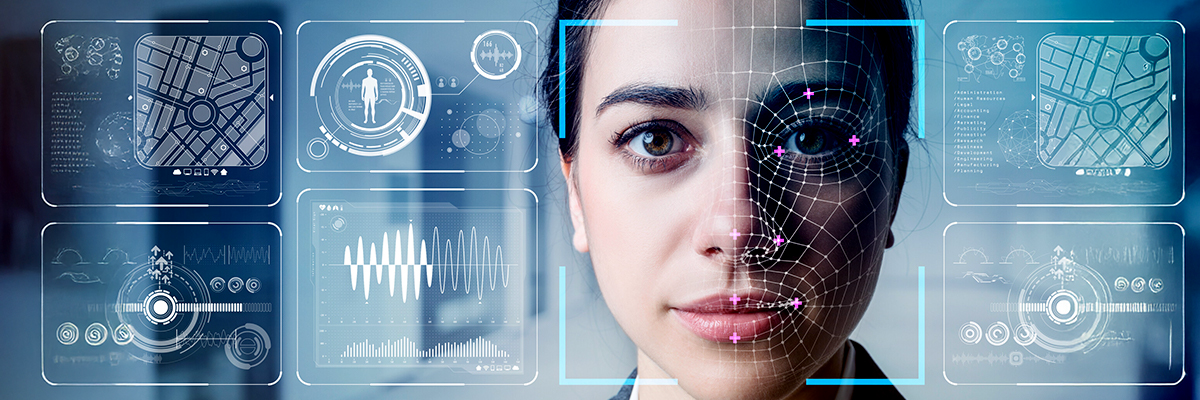
These sensors provide detailed 3D depth information, making it extremely difficult to spoof with 2D images or masks. Light Detection and Ranging (LiDAR) provides very accurate in-depth information.
4. Behavioral Analysis
Behavioral analysis focuses on analyzing subtle user behaviors that are difficult to replicate.
Micro-Expressions
Analyzing subtle facial expressions that are often involuntary. These expressions can reveal underlying emotions and intentions.
Blink Detection
Analyzing the frequency and pattern of blinks. Natural blinking patterns are difficult to replicate in a spoof.
5. Multi-Modal Liveness Detection
Multi-modal liveness detection combines multiple biometric inputs, enhancing accuracy and security.
Face + Voice Authentication
Combining facial recognition with voice analysis. This adds a layer of auditory verification, making it more difficult to spoof.
Fingerprint + Facial Recognition
Combining fingerprint scanning with facial recognition. This adds a layer of physical biometric verification.
These techniques, working in concert, create a robust and multi-layered defense against spoofing. Each technique adds a unique layer of analysis, making it increasingly difficult for fraudsters to bypass the system.
Technologies Used in Liveness Detection
Liveness detection isn’t built on solitary technology; it’s a perfect mixture of cutting-edge innovations.
1. Artificial Intelligence & Deep Learning
AI and deep learning are the cornerstones of modern liveness detection, enabling systems to learn, adapt, and detect increasingly sophisticated spoofing attempts.
AI algorithms analyze vast datasets of facial images and videos, learning to distinguish between real and fake faces.
Deep learning, particularly Convolutional Neural Networks (CNNs), excels at image recognition and pattern analysis, identifying subtle cues that indicate spoofing.
2. Computer Vision & Image Processing
Computer vision and image processing techniques are essential for capturing, analyzing, and enhancing facial images.
These technologies enable systems to extract key facial features, analyze texture and motion, and detect inconsistencies that may indicate a spoof.
Image processing techniques are used to enhance image quality, reduce noise, and normalize images for accurate analysis.
3. Neural Networks (CNN, RNN)
Neural networks, particularly CNNs and Recurrent Neural Networks (RNNs), are crucial for analyzing complex visual data and detecting patterns.
CNNs are highly effective at image recognition, analyzing facial features and patterns with remarkable accuracy.
RNNs can be used to analyze video feeds, and track subtle changes over time, to aid in detecting replay attacks.
4. Biometric Sensors (IR, LiDAR, 3D cameras)
Biometric sensors provide detailed physical data that enhances the accuracy of liveness detection.
Infrared (IR) sensors detect heat signatures, ensuring that the captured image is of a live person.
LiDAR and 3D cameras capture detailed 3D depth information, making it extremely difficult to spoof with 2D images or masks.
5. Edge Computing for Real-Time Processing
Edge computing enables real-time processing of biometric data, crucial for fast and efficient liveness detection.
Processing data on the edge, closer to the source, reduces latency and enhances responsiveness.
This is particularly important for applications that require immediate authentication, such as online transactions and access control.
6. Blockchain for Secure Identity Verification
Blockchain technology can enhance the security and integrity of identity verification processes.
Blockchain provides a secure and immutable ledger for storing and verifying identity data.
This can help prevent identity theft and fraud, ensuring that identity information is accurate and tamper-proof.
7. Cloud vs. On-Device Processing
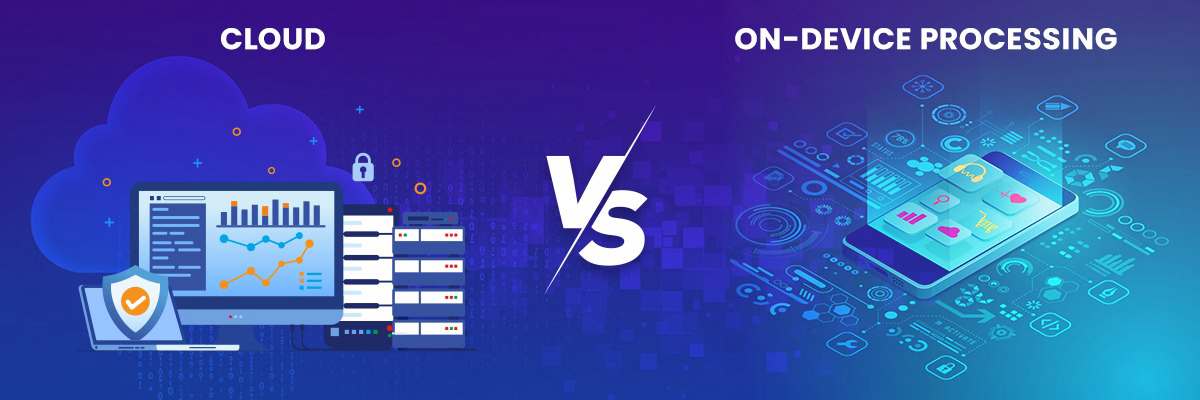
The decision to process biometric data in the cloud or on the device is a critical strategic choice.
Cloud processing offers scalability and powerful computing resources, but it raises privacy concerns.
On-device processing enhances privacy and reduces latency, but it may be limited by device capabilities.
Wrapping Up
From safeguarding our financial accounts to improving age verification online, liveness detection is a powerful tool for business. That’s especially true as spoofing and deepfake attacks advance. Deepfake scams have already caused significant losses. For example, one company reportedly lost $25 million after scammers used AI-generated video calls to impersonate executives, according to the South China Morning Post.
Ultimately, liveness detection systems continue to advance. They’re more user-friendly and seamless than ever. And businesses can incorporate them into onboarding to protect their customers and their bottom line.