



Attention Vape Retailers: Operation Red Mist Seized 18 Million Illegal Vapes. How Many Made It to Your Shelf?
August 25, 2026
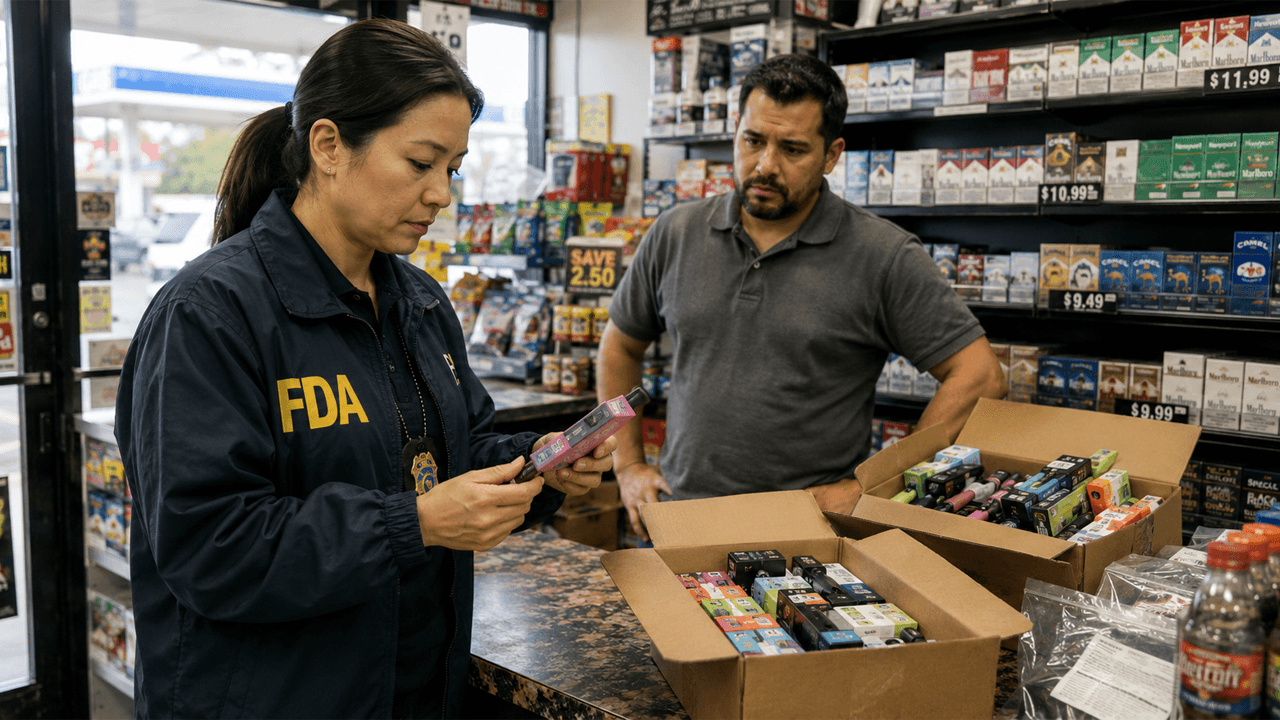
Imagine this: A Food and Drug Administration (FDA) compliance inspector walks into your vape shop on a Tuesday afternoon. She pulls a disposable off the shelf, scans the packaging, and looks up. "This product has no premarket authorization," she says. "You're in violation."
You explain that your distributor told you it was FDA-compliant. You have the invoice. You stocked it in good faith.
It doesn't matter. The fine is $21,903. Per violation. And you have 200 units on that shelf.
This scenario is playing out across the country — and the retailers caught in it didn't steal anything, didn't cut any corners, and didn't knowingly break any law. They trusted their supplier. That trust is exactly what fraudulent distributors are counting on.
Operation Red Mist: The Scale of What's Coming In
On May 14, 2026, U.S. Customs and Border Protection, the FDA, and the U.S. Coast Guard announced the results of Operation Red Mist — a coordinated maritime enforcement operation targeting unauthorized e-cigarette imports from China.
The numbers are staggering: 18 million illegal vaping devices seized. $175 million in estimated value. All of it lacking FDA marketing authorization.
Investigators found shipments that had been deliberately misclassified, improperly labeled, and disguised with fraudulent documentation — tactics designed specifically to evade customs detection, avoid import duties, and move illegal product into the U.S. retail supply chain undetected.
"The spread of illegal e-cigarettes is alarming for communities everywhere," said Diane J. Sabatino, CBP's Executive Assistant Commissioner for Field Operations. "Our frontline personnel are working tirelessly to keep these dangerous products out of our communities."
Operation Red Mist isn't a one-time event. It's a signal that federal enforcement has moved upstream — from retail shelves to the shipping containers feeding them.
The Fraud That Starts Before the Product Reaches Your Store
Here's what most retailers don't realize: the scam isn't happening at the register. It's happening when the distributor rep walks in the door.
Fraudulent distributors — many operating under rapidly changing brand names to avoid regulatory tracking — sell unauthorized Chinese-manufactured vapes to convenience stores, smoke shops, and vape retailers with fabricated compliance claims. Products arrive with packaging that mimics FDA-authorized branding, counterfeit compliance markings, and in some cases, QR codes that link to fake verification websites designed to fool both retailers and consumers.
The distributor collects payment. Moves on to the next account. And when the inspector shows up six months later, they're nowhere to be found.
FDA Commissioner Dr. Marty Makary put the scale of this problem in stark terms in September 2025: "As much as 54% of vaping products sold nationally are illegal."
More than half. If you sell vapes and you haven't verified every stock keeping unit (SKU) against the FDA's authorized product list, the odds are worse than a coin flip that something on your shelf doesn't belong there.
Why Retailers Are So Vulnerable
The FDA has authorized only 45 vaping products for legal sale in the United States — a vanishingly small list compared to the thousands of SKUs flooding the wholesale market. Most authorized products are tobacco- or menthol-flavored. If your distributor is offering fruit flavors, candy flavors, or anything with a built-in game or Bluetooth speaker, it almost certainly lacks authorization. No exceptions.
The problem is that many retailers simply don't know this. The FDA acknowledged as much when it mailed compliance materials to more than 300,000 retailers nationwide in late 2025 — because the knowledge gap is that widespread.
Fraudulent distributors exploit this gap directly. They target retailers who are busy, who trust their supply relationships, and who have no reason to suspect the product showing up on the truck isn't legitimate.
The Enforcement Is Already Here
This isn't a future risk. The FDA has already filed civil money penalty complaints against 175 retailers for selling unauthorized e-cigarettes — retailers who, in many cases, had no idea the products were illegal.
The maximum penalty: $21,903 per violation. Repeat violations within a 48-month window escalate that figure. And Congress has directed $200 million toward vape enforcement in fiscal year 2026 — the largest enforcement budget ever dedicated to illegal e-cigarettes in the U.S.
More inspections are coming. More retailers will be caught with unauthorized product on their shelves. The only question is whether those retailers knew what they were stocking.
Red Flags: When Your Distributor Might Be the Problem
Watch for these warning signs that a supplier may be offering unauthorized or counterfeit vape products:
- Flavors that seem too good to be legal. Candy, dessert, and tropical flavors have not received FDA authorization. If it's on the market and it's not tobacco or menthol, it's almost certainly unauthorized.
- Pricing that's suspiciously low. Counterfeit products have no compliance costs built in. If it's dramatically cheaper than a comparable authorized product, ask why.
- Brand names you've never heard of — or that seem to change. Illicit distributors rotate brand names to evade enforcement tracking.
- Vague or unverifiable compliance documentation. Ask for the FDA PMTA authorization number. If they can't provide one, cross-reference the product at fda.gov/authorizedecigs.
- QR codes that don't resolve to fda.gov. Counterfeit products increasingly include QR codes linking to fake verification sites. Scan them yourself before the FDA does.
What Retailers Can Do Now
Verify before you stock. The FDA maintains a real-time Searchable Tobacco Product Database covering every legally authorized product. If an SKU isn't in that database, it doesn't go on your shelf — regardless of what your distributor says.
Document your due diligence. If an inspector arrives, your best defense is a paper trail showing you actively verified your inventory against the FDA's authorized list. Invoices alone aren't enough. Records that show you checked — and when — matter.
Know your distributors. Work only with established, licensed distributors who can provide verifiable FDA authorization numbers for every product they offer. If a new rep shows up offering prices that seem too good to be true and compliance documentation you can't verify, that's not an opportunity. That's a liability walking through your door.
The supply chain scam targeting vape retailers is sophisticated, well-funded, and actively exploiting the information gap between what the law requires and what retailers know. The distributors running it are betting you'll trust the invoice and not check the database.
Don't give them that bet.