
Ghost ID Scam in Retail: Detection, Risks, and Prevention Strategies
- September 22, 2026

June 16, 2026
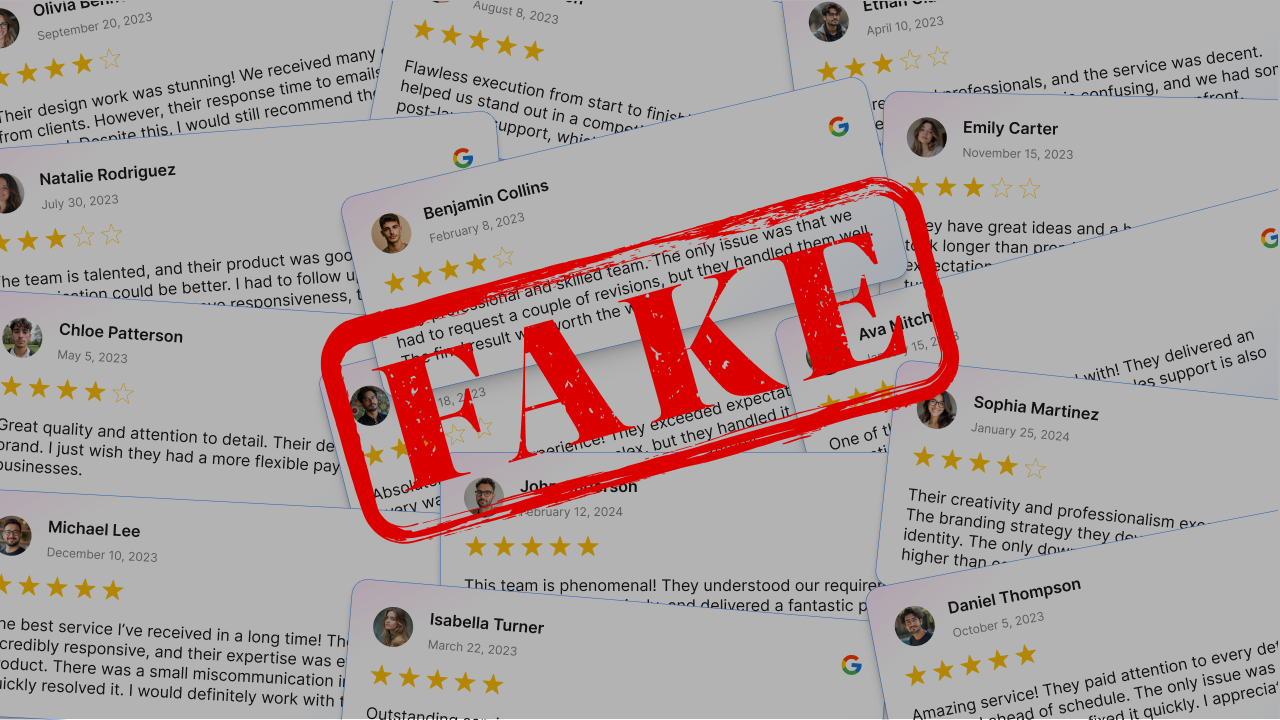
As fake Google review scams become more sophisticated, businesses are learning how to identify suspicious activity, protect customer trust, and maintain a credible online presence.
This type of scam involves deceptive tactics designed to manipulate a business's online reputation for financial gain, competitive advantage, or malicious intent. These scams typically exploit a company's Google Business Profile, where customer reviews are publicly displayed and can influence purchasing decisions.
Scammers know that most business owners work hard to earn positive reviews and protect their reputation. That's exactly why fake review schemes can be so effective—and so frustrating.
By posting fake Google reviews, threatening reputational damage, or offering fraudulent reputation management services, they attempt to pressure businesses into making payments or taking other actions that benefit the scammer.
While legitimate negative reviews are a normal part of doing business, review scams often involve fabricated experiences, coordinated campaigns, or direct attempts to extort business owners.
If you’ve ever looked at a sudden negative review and thought, “That doesn’t seem right,” you’re not alone.
Fake Google review scams are becoming more common, and they show up in a few predictable ways.
Here are five tactics businesses should know about:
This one is surprisingly common.
A business suddenly receives one or more fake-looking negative reviews. Shortly after, the reviewer—or someone claiming to represent them—reaches out with a "solution."
Pay a fee, and the reviews disappear.
It’s a pressure tactic built on urgency and frustration. The goal isn’t feedback—it’s payment.
This is the "we can fix your online reputation fast" pitch.
Scammers contact businesses offering to remove negative reviews, boost ratings, or "clean up" your Google presence almost overnight.
Some of these services use questionable methods. Others simply take payment and disappear.
Either way, if someone is promising guaranteed results or instant reputation recovery, that’s a major red flag.
Not all scams are negative.
Some offer packages of "verified" five-star reviews to quickly improve your rating.
It might sound like a shortcut—but it comes with real risk. Google actively prohibits fake engagement, and customers are getting better at spotting reviews that don’t feel real or authentic.
In the long run, it usually does more harm than good.
Some scammers take things further by turning it into a recurring threat.
Instead of a one-time payment, they demand ongoing money to "keep your reputation safe" or prevent additional negative reviews.
It’s essentially digital blackmail—and paying rarely ends it. In many cases, it signals that your business is willing to pay, which can make the demands continue.
Sometimes the goal isn’t money—it’s competition.
Fake reviews may be posted to damage a rival business’s reputation, often using made-up stories or exaggerated complaints.
These reviews are typically vague, emotional, and difficult to verify. And if they pile up, they can unfairly influence how potential customers perceive a business.
Not every negative review is a scam—but patterns matter.
Here are some signs something may be off:
A quick spike in one-star reviews—especially if they appear close together—can signal coordinated activity rather than genuine customer feedback.
Scam reviews often sound similar: "terrible service," "worst experience ever," without specifics or context.
Look for accounts with little history, generic usernames, no profile photos, or reviews scattered across unrelated businesses in different locations.
If a review describes something that never happened—or can’t be traced back to an actual customer interaction—it may not be legitimate.
If someone contacts you asking for money to remove reviews or prevent more from being posted, treat it as a serious warning sign.
If you can’t find any evidence that the reviewer was ever a customer, it doesn’t automatically mean it’s fake—but it does raise questions worth investigating.
Even a small number of fake reviews can have a real ripple effect.
Most customers don’t read every review—they skim. And sometimes a few negative comments are enough to create hesitation.
Google reviews play a role in local search performance. A sudden drop in ratings or an influx of negative feedback can affect how visible your business is online.
If a potential customer is comparing you to a competitor, reviews can be the deciding factor. Negative or suspicious feedback can quietly push them elsewhere.
Beyond the business impact, fake reviews can be frustrating for staff who know the claims aren’t true. It can also pull time away from daily operations as you work to respond and report issues.
If you think your business is being targeted, the key is to stay organized and act quickly.
Before you report anything, take screenshots, save messages, and record any suspicious activity. This creates a clear paper trail if Google requests more information.
You can report individual reviews directly through your Google Business Profile. Google will then evaluate whether the content violates its policies.
If the account appears abusive or suspicious across multiple businesses, reporting the profile itself can help trigger a broader review.
If someone is threatening your business or demanding payment in exchange for review removal, this tool is specifically designed for those situations. Provide as much detail and evidence as possible.
Submit scam or fraud details you’ve noticed so we can warn the retail community and their shoppers, supporting awareness and prevention efforts.