


AI-Driven Coupon Fraud: What Retailers Need to Know
- April 24, 2026



October 21, 2026
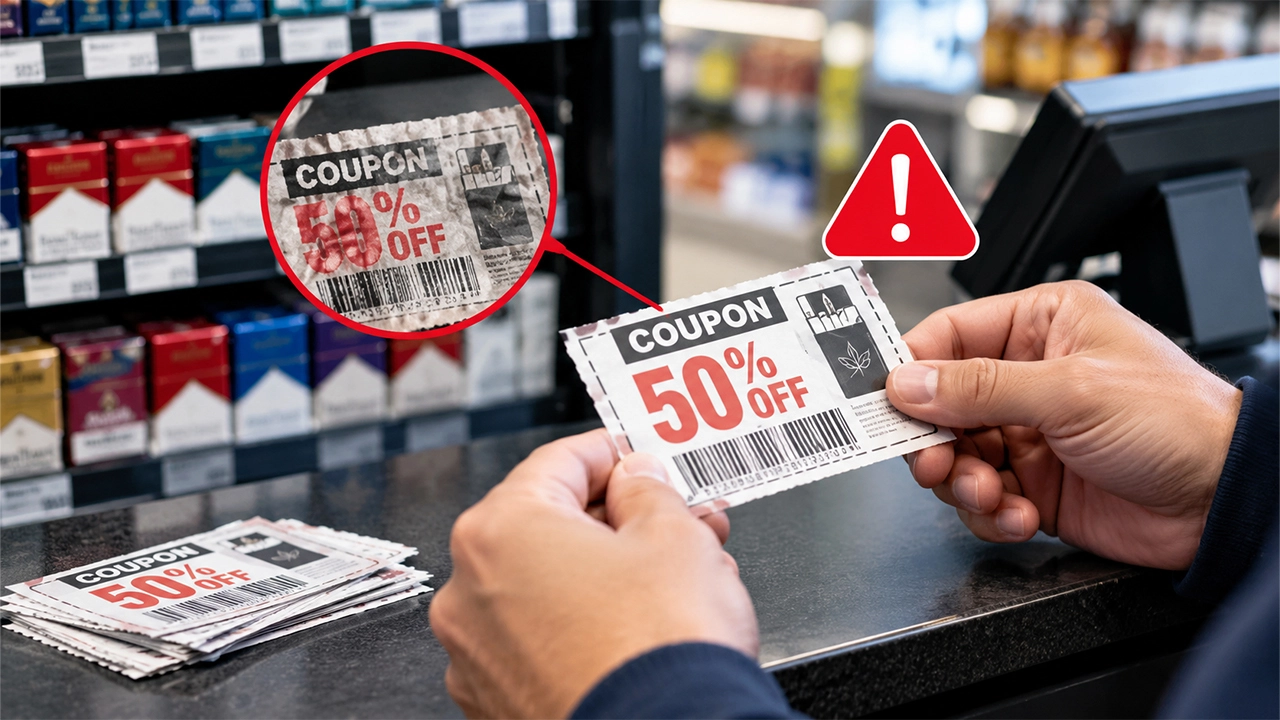
Fake tobacco coupons can cause problems for retailers when they look like the real thing. And just because a coupon scans at checkout doesn't mean it's legitimate or that the retailer will get reimbursed for the discount.
Coupons are common in tobacco retail. Manufacturers offer promotions to encourage purchases, and customers expect discounts when they buy eligible products.
But what happens when a coupon looks genuine and isn't?
Counterfeit tobacco coupons are fake or altered offers designed to imitate legitimate manufacturer promotions. They may use familiar branding, promotional language, and barcodes to appear valid at checkout.
So why target tobacco coupons? Cigarettes can be expensive, and discounts can give customers an incentive to buy. For convenience stores, gas stations, and smoke shops, accepting a fraudulent coupon could mean applying a discount the retailer can't recover. Even a small loss can add up if it happens repeatedly.
A successfully scanned barcode doesn't automatically mean a coupon is legitimate. Retailers still need to check whether the offer is valid and applies to the product being purchased.
Two Pennsylvania incidents, reported in 2010 and 2023, illustrate different attempts to use counterfeit cigarette coupons at checkout.
In January 2010, police in Vernon Township, near Meadville, investigated an alleged attempt to use a counterfeit coupon offering $4 off a pack of Marlboro cigarettes at a Sheetz convenience store. According to Convenience Store News' report on the incident, the coupon resembled an offer from SmartSource, but its barcode couldn't be read by the store's cash registers.
In January 2023, Pennsylvania State Police investigated two men who allegedly attempted to use bogus electronic coupons to obtain free Newport cigarettes at a 7-Eleven in Hempfield Township, Westmoreland County. CBS Pittsburgh reported on the alleged electronic coupon scam, which police suspected could be part of a wider scheme targeting retailers.
Neither report establishes that a counterfeit coupon was successfully redeemed. Still, both incidents show why retailers need a clear process for handling questionable offers. Even an unsuccessful attempt can take employees away from customers, and accepting a fraudulent coupon could leave a retailer covering a discount it can't recover.
Counterfeit coupons can take different forms, depending on how they're created, presented, and checked at checkout.
A fake cigarette coupon may imitate a legitimate manufacturer offer or involve changes to an existing coupon. The goal is to make it look authentic enough to be accepted.
Coupons may be presented on paper or electronically during a tobacco purchase. Cashiers need to check that the offer matches the product and its promotion terms.
A barcode scan doesn't guarantee legitimacy. Depending on the system, a barcode may be readable even if the coupon is expired, altered, unauthorized, or ineligible for the product.
If employees rely solely on whether a barcode scans, a fraudulent discount could slip through.
Similar coupon attempts at multiple stores can make it harder to spot a pattern. Keeping records of suspicious activity can help retailers identify repeat attempts and determine when to contact coupon providers or authorities.
Counterfeit tobacco coupons can affect retailers of different sizes and business types.
Counterfeit coupon fraud can cost retailers more than the discount itself.
When a retailer accepts a fraudulent coupon, the customer receives the discount, but the retailer may be left covering the cost. Reimbursement generally depends on whether the coupon meets the program's requirements.
For example, a $4 coupon that doesn't qualify for reimbursement could leave the retailer covering that amount. Repeated losses can add up, although the financial impact depends on the promotion's terms and the circumstances of the redemption.
Investigating suspicious transactions, reviewing coupon records, and following up with manufacturers or coupon providers takes time.
Employees may need to gather documentation and check whether similar attempts occurred at other locations. That leaves less time for serving customers and handling other store tasks.
One red flag alone doesn't necessarily mean a coupon is fake, but if something seems off in several ways, it's worth taking a closer look.
Check that the brand, product, pack size, expiration date, and other promotion requirements match the coupon's terms. If anything doesn't match, review the offer before applying the discount.
A discount that seems unusually generous deserves a closer look. Offers that dramatically reduce a product's price or make it free should be checked against an authorized promotion.
Blurry branding, inconsistent fonts, suspicious edits, or conflicting details may indicate that a coupon has been altered. However, print quality alone doesn't prove fraud.
A barcode that won't scan, produces an unexpected result, or doesn't match the displayed offer may indicate a problem. A successful scan, however, doesn't guarantee that the coupon is valid.
If the same coupon keeps showing up in ways that don't match the promotion's terms, it's worth taking a closer look. Employees should check the coupon's conditions and follow store procedures instead of assuming it's valid.
A sudden increase in high-value discounts, repeated exceptions at one register, or similar questionable transactions across locations may signal a pattern worth investigating.
Consistent checkout procedures and good recordkeeping can help retailers catch questionable coupons before applying a discount.
Train cashiers to identify common warning signs, check promotion terms, and distinguish a readable barcode from a valid coupon. They should also know what to do when an offer appears questionable.
Confirm that the coupon applies to the product, meets the promotion's requirements, and falls within its valid dates. If an offer can't be verified, employees should follow the store's exception policy rather than guess.
Unexpected scan results, product mismatches, and repeated errors shouldn't be ignored. Point-of-sale (POS) systems can provide useful transaction information, but their validation capabilities vary.
Set a consistent process for handling coupons that won't scan, don't match the product, or appear suspicious. This helps employees make consistent decisions, even during busy periods.
Record questionable offers and transactions, including the date, location, product, and reason for the exception. Reviewing these records can help retailers spot recurring patterns and decide when further investigation is needed.
Transaction records can help retailers spot unusual discounts, repeated exceptions, or patterns that might point to coupon abuse. It's also important to know what your POS system can actually check. Just because a coupon scans doesn't mean it's valid or that the store will get reimbursed for the discount.
Coupon fraud can take different forms, including automated abuse of online promotions. Read AI-Driven Coupon Fraud: What Retailers Need to Know to explore other tactics retailers may encounter.
If a coupon appears fraudulent, contact the relevant manufacturer or coupon provider to verify the offer and ask about reporting procedures. Depending on the circumstances, contacting law enforcement may also be appropriate.
Submit scam or fraud details you’ve noticed so we can warn the retail community and their shoppers, supporting awareness and prevention efforts.